How to Scale a Recipe for Any Number of Servings
Learn the simple math and pro tips behind scaling recipes up or down. Never ruin a dish by guessing proportions again.
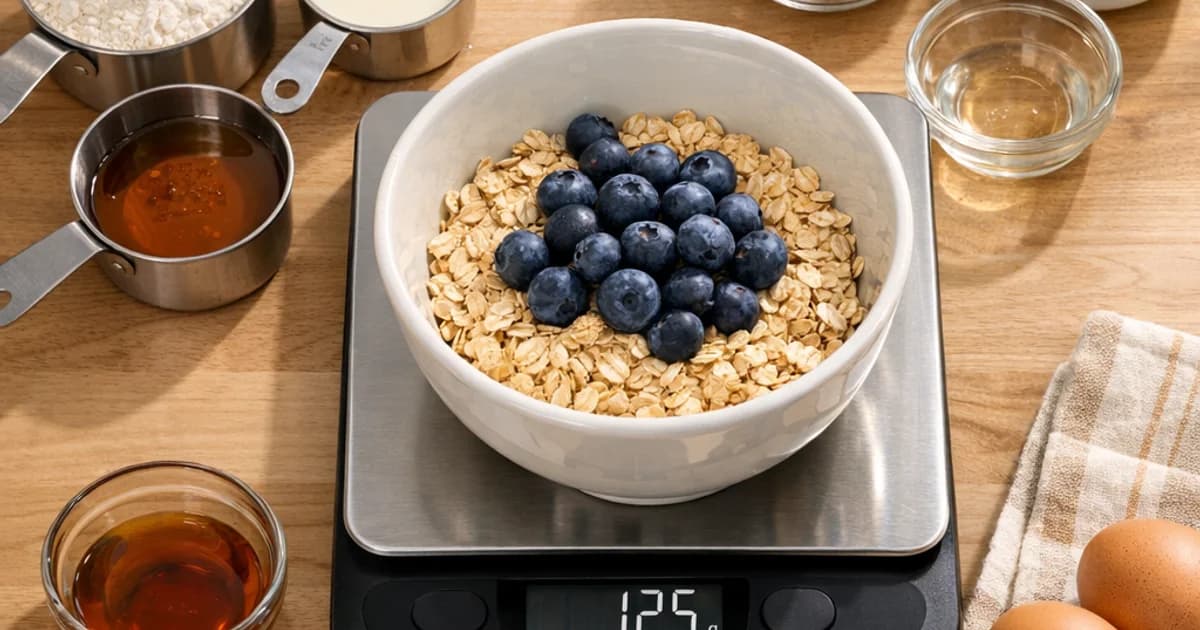
You found a beautiful pasta recipe that serves four, but you are cooking for twelve. Or maybe you spotted a cake recipe that makes three dozen cookies, and you only need a dozen for a small gathering. Either way, you are faced with the same challenge: how do you adjust the ingredient amounts without throwing the whole dish off?
Scaling recipes is one of the most useful skills a home cook can develop, yet it is also one of the most commonly mishandled. The math itself is straightforward, but there are real pitfalls waiting for the unwary — particularly in baking, where getting proportions wrong can mean the difference between a fluffy loaf and a dense brick.
The most common mistakes cooks make when scaling are assuming that everything scales perfectly in a straight line (it does not), skipping the step of writing down the new amounts before they start (which leads to mid-recipe confusion), and applying the same multiplier blindly to every ingredient including salt and baking powder (which almost always overshoots).
This guide will walk you through the core formula, the exceptions you need to know about, and a clear step-by-step process you can use every time.
Free Tool
Recipe Scaler
Instantly scale any recipe up or down with our free calculator.
The Basic Formula for Scaling Recipes
The fundamental idea behind recipe scaling is a single ratio called the scaling factor. Here is how it works:
Scaling factor = desired servings / original servings
Once you have that number, you multiply every ingredient quantity in the recipe by it. That is the whole formula.
A few examples to make it concrete:
- Original recipe: 4 servings. You want 6. Scaling factor = 6 / 4 = 1.5
- Original recipe: 8 servings. You want 4. Scaling factor = 4 / 8 = 0.5
- Original recipe: 2 servings. You want 8. Scaling factor = 8 / 2 = 4
So if the original recipe calls for 2 cups of flour and your scaling factor is 1.5, you need 2 x 1.5 = 3 cups of flour. If it calls for 1 teaspoon of olive oil and your scaling factor is 0.5, you need half a teaspoon.
This approach works reliably for most savory recipes — soups, stews, stir-fries, roasts, salads, grain dishes, and most sauces. The proportions hold, the flavors multiply at roughly the same rate, and the cooking techniques stay the same.
Where things get more complicated is in a handful of specific categories that do not follow the linear rule.
When Scaling Gets Tricky
Understanding where the formula breaks down will save you from the most frustrating scaling failures. These are the three areas that need special attention.
Baking Adjustments
Baking is the category where scaling causes the most trouble, and for good reason. Baked goods are essentially chemical reactions. The ratio of flour to fat to liquid to leavening to eggs is carefully balanced to produce a specific texture. When you scale a recipe, these relationships can shift in ways that the simple multiplication formula does not capture.
The good news is that most baking ingredients do scale linearly — flour, butter, sugar, chocolate, and most liquids can simply be multiplied by your scaling factor. The exceptions are:
Leavening agents (baking powder and baking soda) do not scale in a straight line. If you double a recipe, you generally should not double the baking powder. The standard guidance is to scale leavening agents by about 25 percent less than your factor suggests for larger batches. So for a 2x batch, start at 1.75x the leavening rather than 2x, and go from there. Too much baking soda gives baked goods a metallic or soapy taste, and too much baking powder can cause a rapid rise followed by a collapse.
Eggs present a particular challenge because they come in fixed units. A recipe that calls for 3 eggs and scales to 4.5 eggs requires a judgment call — round down to 4 and compensate with a tablespoon of milk, or use 4 whole eggs plus one yolk. In most cases, rounding to the nearest whole egg works fine.
Pan size matters more than people realize. If you double a cake recipe, you cannot simply pour the batter into the same pan and expect the same result. You will need either a larger pan or two pans of the original size. A deeper batter means a longer baking time and a different texture in the center. When scaling baked goods, always think about your pan dimensions alongside the ingredient amounts.
Seasoning and Spices
Salt, pepper, herbs, and spices are notoriously unreliable when scaled directly. The reason is partly sensory and partly chemical: flavor compounds do not always intensify in a perfectly linear relationship with concentration.
The practical rule is to start at 75 percent of the scaled amount for all seasonings, then taste and adjust. If your scaling factor is 3, multiply your spices by 2.25 instead of 3. You can always add more, but you cannot remove it once it is in the pot.
This is especially true for:
- Hot ingredients like chili, cayenne, and black pepper. A dish that is pleasantly spicy at one serving can become overwhelmingly hot when quadrupled if the heat is scaled directly.
- Strong aromatics like garlic, ginger, and anchovies. These punch above their weight and tend to dominate at higher concentrations.
- Salt, particularly when a recipe involves long simmering or reduction. Liquids evaporate but salt stays, concentrating as the dish cooks. Under-salt slightly and adjust at the end.
- Acidic ingredients like lemon juice and vinegar. Start conservative and taste.
Cooking Times and Temperatures
One of the most widespread scaling misconceptions is that if you double the food, you should double the cooking time. This is almost never correct.
The oven temperature should stay the same. Raising the temperature to compensate for a larger batch leads to burnt exteriors and raw centers.
Cooking time increases, but not proportionally. The amount by which it increases depends on the surface area and thickness of what you are cooking, not the total weight. A roast that is twice as heavy will not take twice as long, but it will take meaningfully longer — typically 25 to 50 percent more time depending on the cut and the recipe.
The most reliable approach is to cook to doneness indicators rather than fixed times. Use a thermometer for meats. Check pasta for bite and vegetables for tenderness. Start checking for doneness earlier than the scaled time would suggest, and keep going until the food is actually ready.
For soups and stews, the total volume does not dramatically change the cooking time once the liquid reaches a simmer. What changes is how long it takes to come to that simmer in the first place.
Step-by-Step: How to Scale Any Recipe
Here is a repeatable process that works for any recipe you want to scale.
-
Identify the original serving count. Find it in the recipe header. If it says "serves 4" or "makes 24 cookies," that is your starting number.
-
Decide on your target serving count. How many people are you feeding, or how many units do you need?
-
Calculate your scaling factor. Divide target by original. Write this number down.
-
List every ingredient and its original amount. Do this before you start cooking, not while you are standing over a hot pan.
-
Multiply each ingredient by the scaling factor. Work through the list systematically. Round to practical measurements — if you get 1.3 teaspoons, round to 1 and a quarter teaspoons.
-
Apply the exceptions. Reduce leavening agents slightly. Start seasonings at 75 percent. Note whether you need different pan sizes.
-
Write down all the scaled amounts before you begin cooking. This is the step most people skip, and it is the one that causes the most mistakes.
-
Adjust cooking time and method. Estimate rather than calculate — expect a modest increase for larger quantities, use temperature and texture as your true doneness guides.
-
Taste as you go. Especially for seasonings, your palate is a better instrument than any formula.
Tip
Before you start cooking, write out your complete scaled ingredient list on paper or in your phone's notes. Once you are mid-recipe with hands covered in flour or broth bubbling on the stove, it is very easy to lose track of which quantities you already adjusted. A written list you can cross off as you measure takes thirty seconds to make and prevents a frustrating number of errors.
Common Scaling Mistakes to Avoid
Even cooks who know the basic formula regularly run into these specific problems:
- Scaling leavening agents at the full multiplier. This is the single most common baking failure. Always reduce baking powder and baking soda by about 25 percent relative to your calculated amount.
- Doubling the cooking time. Cooking time scales with thickness and surface area, not mass. Doubling the food does not double the time required.
- Forgetting to account for pan or vessel size. A doubled soup recipe in the same pot will overflow. A doubled cake batter in the same pan will bake differently. Think about your equipment before you start.
- Scaling salt to the full amount and not tasting. Salt is easy to over-add and impossible to remove. Always season conservatively and finish by taste.
- Using the formula for very large scale-ups without testing. Going from 4 servings to 40 introduces compounding issues across leavening, seasoning, equipment, and timing. For professional-scale jumps, expect to need at least one test batch.
- Not converting to practical measurements. 0.375 teaspoons does not need to be measured precisely. Round to 3/8 teaspoon or slightly under half a teaspoon and move on.
- Ignoring egg fractions in baking. Three and a half eggs is not a useful instruction. Think through how you will handle fractional eggs before you start.
Key Takeaway
To scale any recipe reliably: calculate your scaling factor (desired servings divided by original servings), multiply every ingredient by that factor, then apply three key corrections — reduce leavening agents by about 25 percent below the scaled amount, start seasonings at 75 percent and adjust by taste, and judge doneness by temperature and texture rather than scaled cooking time. Write down all your scaled amounts before you begin.
Quick Reference: Common Scaling Ratios
Use this table as a quick-reference when you are working without a calculator.
| Original Amount | Half (0.5x) | Double (2x) | Triple (3x) |
|---|---|---|---|
| 1 cup | 1/2 cup | 2 cups | 3 cups |
| 3/4 cup | 6 tbsp | 1 1/2 cups | 2 1/4 cups |
| 1/2 cup | 1/4 cup | 1 cup | 1 1/2 cups |
| 1/3 cup | 2 tbsp + 2 tsp | 2/3 cup | 1 cup |
| 1/4 cup | 2 tbsp | 1/2 cup | 3/4 cup |
| 1 tablespoon | 1 1/2 tsp | 2 tbsp | 3 tbsp |
| 1 teaspoon | 1/2 tsp | 2 tsp | 1 tbsp |
| 1/2 teaspoon | 1/4 tsp | 1 tsp | 1 1/2 tsp |
| 1/4 teaspoon | 1/8 tsp | 1/2 tsp | 3/4 tsp |
| 1 egg | 1 egg (or 1 yolk) | 2 eggs | 3 eggs |
Note that the egg row is approximate — egg scaling often requires judgment rather than arithmetic, especially in baking.
For more help converting between measurement units in the kitchen — tablespoons to cups, ounces to grams, milliliters to fluid ounces — see the Kitchen Unit Conversion Guide. Scaling and unit conversion often go hand in hand, particularly when you are working from recipes that use different measurement systems.
Free Tool
Recipe Scaler
Instantly scale any recipe up or down with our free calculator.
Ready to simplify your meal planning?
Join UseMealPlanner and get AI-generated recipes tailored to your preferences, dietary needs, and schedule.
Download the App