50 Ingredient Substitutions Every Cook Should Know
Out of eggs? No buttermilk? Discover 50 easy ingredient swaps for common cooking and baking needs, including dairy-free, gluten-free, and vegan options.
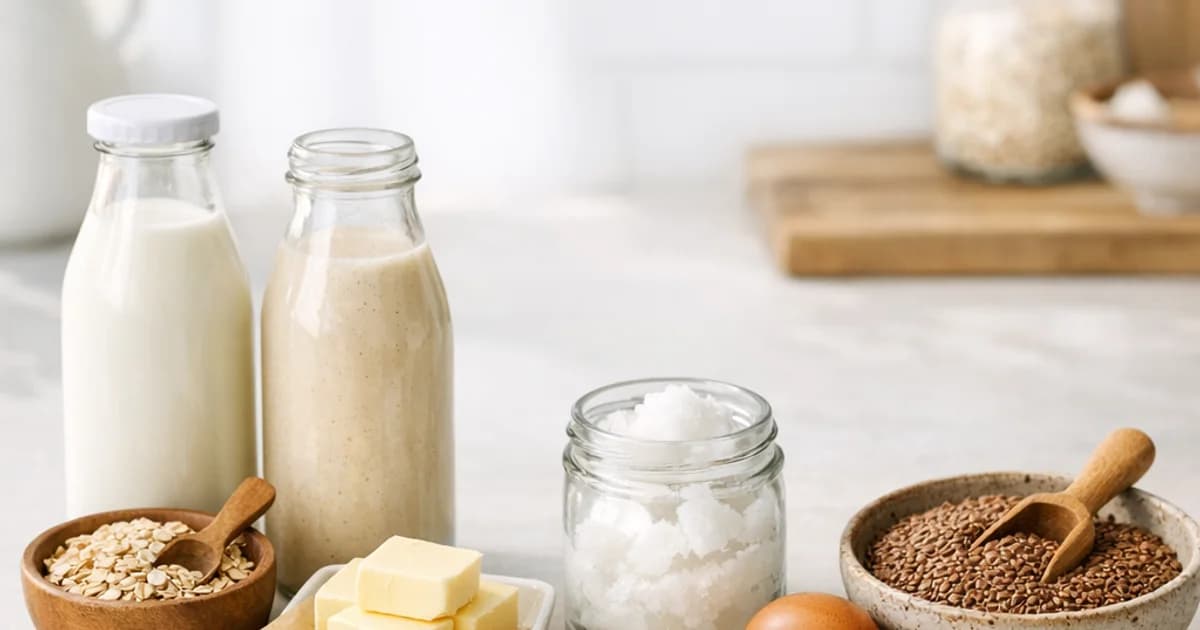
You are halfway through a recipe when you open the fridge and realize you are out of buttermilk. Or you are cooking for a friend with a dairy allergy and you need a quick swap for heavy cream. These moments happen to every cook, and knowing a handful of reliable ingredient substitutions can be the difference between a finished dish and a wasted trip to the grocery store.
This guide covers 50 substitutions organized by category — dairy, eggs, baking staples, common cooking ingredients, and allergy-friendly swaps. Each one has been chosen for its practicality: swaps you can make with ingredients you are likely to already have on hand.
Free Tool
Ingredient Substitution Finder
Find the perfect swap for any ingredient with our free tool.
Dairy Substitutions
Dairy is one of the most frequently substituted ingredient categories, whether for lactose intolerance, veganism, or simply because you ran out. The good news is that most dairy products have several reliable replacements that behave similarly in both cooking and baking.
| Original | Substitute | Ratio/Amount | Best For |
|---|---|---|---|
| Whole milk | Unsweetened oat milk | 1:1 | Sauces, soups, baked goods |
| Whole milk | Water + butter | 1 cup water + 1 tbsp butter | Cakes, muffins, pancakes |
| Buttermilk | Milk + white vinegar | 1 cup milk + 1 tbsp vinegar, rest 5 min | Pancakes, scones, quick breads |
| Buttermilk | Plain yogurt (thinned) | 3/4 cup yogurt + 1/4 cup water | Marinades, dressings, cakes |
| Heavy cream | Full-fat coconut cream | 1:1 | Soups, sauces, whipped topping |
| Heavy cream | Whole milk + butter | 3/4 cup milk + 1/4 cup melted butter | Baking, pasta sauces |
| Sour cream | Plain full-fat Greek yogurt | 1:1 | Dips, toppings, baked goods |
| Cream cheese | Cashew cream cheese | 1:1 | Frosting, cheesecake, spreads |
| Parmesan cheese | Nutritional yeast | 1:1 by volume | Pasta, salads, roasted vegetables |
| Evaporated milk | Full-fat coconut milk | 1:1 | Curries, custards, baked goods |
For most savory dishes, the swap is nearly seamless. In baking, oat milk and soy milk tend to be the most neutral-tasting options, while coconut milk adds a slight sweetness that can complement desserts.
Egg Substitutions
Eggs serve two distinct functions in recipes: they bind ingredients together, and they add moisture. The right substitute depends entirely on which role the egg is playing in a given dish.
| Original | Substitute | Ratio/Amount | Best For |
|---|---|---|---|
| 1 whole egg (binding) | Flax egg | 1 tbsp ground flaxseed + 3 tbsp water, rest 5 min | Muffins, cookies, veggie burgers |
| 1 whole egg (binding) | Chia egg | 1 tbsp chia seeds + 3 tbsp water, rest 5 min | Pancakes, breads, energy bars |
| 1 whole egg (moisture) | Unsweetened applesauce | 1/4 cup per egg | Cakes, quick breads, brownies |
| 1 whole egg (moisture) | Mashed ripe banana | 1/4 cup per egg | Banana bread, muffins, pancakes |
| 1 whole egg (leavening) | Aquafaba | 3 tbsp per egg | Meringues, mousses, mayonnaise |
Tip
Flax and chia eggs work best as binders — they help hold baked goods together but do not add much lift. If your recipe needs eggs primarily for leavening (think soufflés or angel food cake), aquafaba is a better choice because it can be whipped into stiff peaks just like egg whites. For recipes that need both binding and moisture — like most cookies and muffins — applesauce and banana work well but will add noticeable flavor, so choose based on what complements the dish.
Baking Staples
Baking is more sensitive to substitutions than cooking, but many core ingredients still have workable swaps. The key is understanding what each ingredient does structurally so you can choose a replacement that serves the same function.
| Original | Substitute | Ratio/Amount | Best For |
|---|---|---|---|
| All-purpose flour | Oat flour | 1:1 by weight (not volume) | Cookies, muffins, quick breads |
| All-purpose flour | Almond flour | 1:1 by weight (adjust liquid down slightly) | Pancakes, cookies, cakes |
| Cake flour | All-purpose flour + cornstarch | 1 cup minus 2 tbsp AP flour + 2 tbsp cornstarch | Layer cakes, cupcakes |
| Bread flour | All-purpose flour | 1:1 (slightly less chew) | Yeasted breads, pizza dough |
| Granulated white sugar | Coconut sugar | 1:1 | Cookies, cakes, sauces |
| Granulated white sugar | Honey | 3/4 cup honey per 1 cup sugar + reduce liquid by 1/4 cup | Muffins, granola, marinades |
| Brown sugar | White sugar + molasses | 1 cup white sugar + 1 tbsp molasses | Cookies, BBQ sauces, marinades |
| Baking powder | Baking soda + cream of tartar | 1/4 tsp baking soda + 1/2 tsp cream of tartar per 1 tsp baking powder | Any recipe calling for baking powder |
| Baking soda | Baking powder (higher amount) | 3 tsp baking powder per 1 tsp baking soda | Pancakes, muffins (slight flavor difference) |
| Vegetable oil | Melted coconut oil | 1:1 | Cakes, muffins, cookies |
Warning
Swapping flours is where things get most unpredictable. Almond flour contains no gluten and far more fat than all-purpose flour, which means recipes will be denser and more tender — not always in a bad way, but noticeably different. Oat flour bakes closer to all-purpose flour but still tends to produce a slightly softer, more crumbly texture. If you are experimenting with flour swaps in a recipe you care about, start by replacing only half the flour and adjust from there. Similarly, replacing sugar with honey adds liquid to your batter, so reduce another liquid in the recipe by about a quarter cup to compensate.
Common Cooking Ingredients
Everyday cooking relies on a core set of pantry staples — broths, oils, acids, and aromatics. When one of these is missing, there is almost always a practical replacement nearby.
Broths and Liquids
| Original | Substitute | Ratio/Amount | Best For |
|---|---|---|---|
| Chicken broth | Vegetable broth | 1:1 | Soups, risottos, braises |
| Chicken broth | Water + soy sauce | 1 cup water + 1 tsp soy sauce | Stir-fries, quick sauces |
| Beef broth | Mushroom broth | 1:1 | Stews, gravies, braised dishes |
| White wine | Chicken broth + lemon juice | 1/2 cup broth + 1 tbsp lemon juice per 1/2 cup wine | Pan sauces, risotto, seafood |
| Red wine | Pomegranate juice + vinegar | 3/4 cup juice + 1 tbsp red wine vinegar per 1 cup wine | Braises, stews, marinades |
Oils and Fats
| Original | Substitute | Ratio/Amount | Best For |
|---|---|---|---|
| Olive oil | Avocado oil | 1:1 | High-heat cooking, dressings |
| Butter (cooking) | Olive oil | 3/4 cup olive oil per 1 cup butter | Sauteing, roasting |
| Lard or shortening | Refined coconut oil | 1:1 | Pie crusts, flaky pastry |
Acids and Flavor Builders
| Original | Substitute | Ratio/Amount | Best For |
|---|---|---|---|
| White wine vinegar | Apple cider vinegar | 1:1 | Dressings, pickles, marinades |
| Lemon juice | White wine vinegar | 1/2 tbsp vinegar per 1 tbsp lemon juice | Sauces, dressings (not garnishes) |
| Soy sauce | Coconut aminos | 1:1 | Stir-fries, marinades, dipping |
| Worcestershire sauce | Soy sauce + hot sauce + brown sugar | 1 tbsp soy + dash hot sauce + pinch brown sugar per 1 tbsp | Marinades, burgers, stews |
Herbs and Aromatics
| Original | Substitute | Ratio/Amount | Best For |
|---|---|---|---|
| Fresh garlic | Garlic powder | 1/8 tsp garlic powder per clove | Rubs, dry marinades, soups |
| Fresh ginger | Ground ginger | 1/4 tsp ground per 1 tsp fresh | Baked goods, soups, stir-fries |
| Fresh herbs (general) | Dried herbs | 1/3 the amount (dried is more concentrated) | Soups, stews, sauces |
For the herbs and aromatics category, the main principle is concentration: dried herbs are roughly three times more potent than fresh. This means if a recipe calls for one tablespoon of fresh thyme, you only need one teaspoon of dried. The flavor will be slightly earthier and less bright, but it works well in anything that cooks for more than ten minutes.
Allergy-Friendly Swaps
These substitutions are specifically designed around the most common dietary restrictions and food allergies: gluten intolerance, tree nut allergies, and soy sensitivity. Many of these overlap with the swaps above, but this section focuses on reliable options you can reach for without having to think through complicated conversions.
| Original | Substitute | Ratio/Amount | Best For |
|---|---|---|---|
| All-purpose flour (gluten) | Certified GF oat flour | 1:1 by weight | Muffins, cookies, pancakes |
| All-purpose flour (gluten) | Rice flour | 1:1 (best blended with tapioca starch) | Cakes, coatings, sauces |
| Soy sauce (soy) | Coconut aminos | 1:1 | All savory cooking |
| Tofu (soy) | Cooked white beans | 1:1 by weight (crumbled) | Scrambles, stuffings |
| Almond milk (nut) | Oat milk | 1:1 | Baking, coffee, smoothies |
| Almond flour (nut) | Sunflower seed flour | 1:1 | Cookies, energy balls, coatings |
| Peanut butter (nut) | Sunflower seed butter | 1:1 | Sauces, baking, spreads |
| Cashew cream (nut) | Silken tofu (blended) | 1:1 | Creamy sauces, dressings |
| Breadcrumbs (gluten) | Crushed rice crackers | 1:1 | Coatings, toppings, meatballs |
| Pasta (gluten) | Rice noodles or chickpea pasta | 1:1 by dry weight | Pasta dishes, cold noodle salads |
A note on the gluten-free flour swaps: rice flour on its own tends to produce a slightly gritty texture in baked goods. Blending it with a starch — tapioca starch works well at a ratio of roughly 80% rice flour to 20% tapioca starch — produces a smoother result that is much closer to all-purpose flour in texture. If you bake gluten-free regularly, a pre-blended all-purpose GF flour mix (many good commercial options exist) will save you time and produce more consistent results.
Knowing these substitutions also changes how you approach meal planning. Instead of organizing your week around rigid grocery lists where everything has to be exactly right, you can work with what you have. A recipe calling for sour cream becomes flexible when you know Greek yogurt is interchangeable. A dish built on chicken broth is still achievable when you only have vegetable broth and a splash of soy sauce.
You can also use this knowledge to adapt recipes to dietary needs without hunting for specialty versions. Most recipes can be made dairy-free, gluten-free, or egg-free with straightforward swaps — you just need to know which ones work.
Key Takeaway
Most ingredient substitutions come down to understanding what a given ingredient does in a recipe — whether it binds, adds moisture, provides structure, or builds flavor. Match the substitute to the function, not just the ingredient, and you will get reliable results. Keep a stocked pantry with versatile staples like apple cider vinegar, ground flaxseed, oat milk, coconut aminos, and nutritional yeast, and you will rarely be stuck.
For more kitchen math and practical guides, these articles go well alongside this one:
- How to Scale a Recipe — when you need to double or halve a recipe and want to know which ingredients scale linearly and which do not
- Kitchen Unit Conversion Guide — cups to grams, tablespoons to milliliters, Fahrenheit to Celsius, and everything in between
Free Tool
Ingredient Substitution Finder
Find the perfect swap for any ingredient with our free tool.
Ready to simplify your meal planning?
Join UseMealPlanner and get AI-generated recipes tailored to your preferences, dietary needs, and schedule.
Download the App