Meal Prep for College Students: How to Eat Well on a Tight Budget
A complete meal prep guide for college students. Covers budget-friendly recipes, dorm-friendly cooking with limited equipment, grocery shopping strategies, and how to eat healthy without a full kitchen.
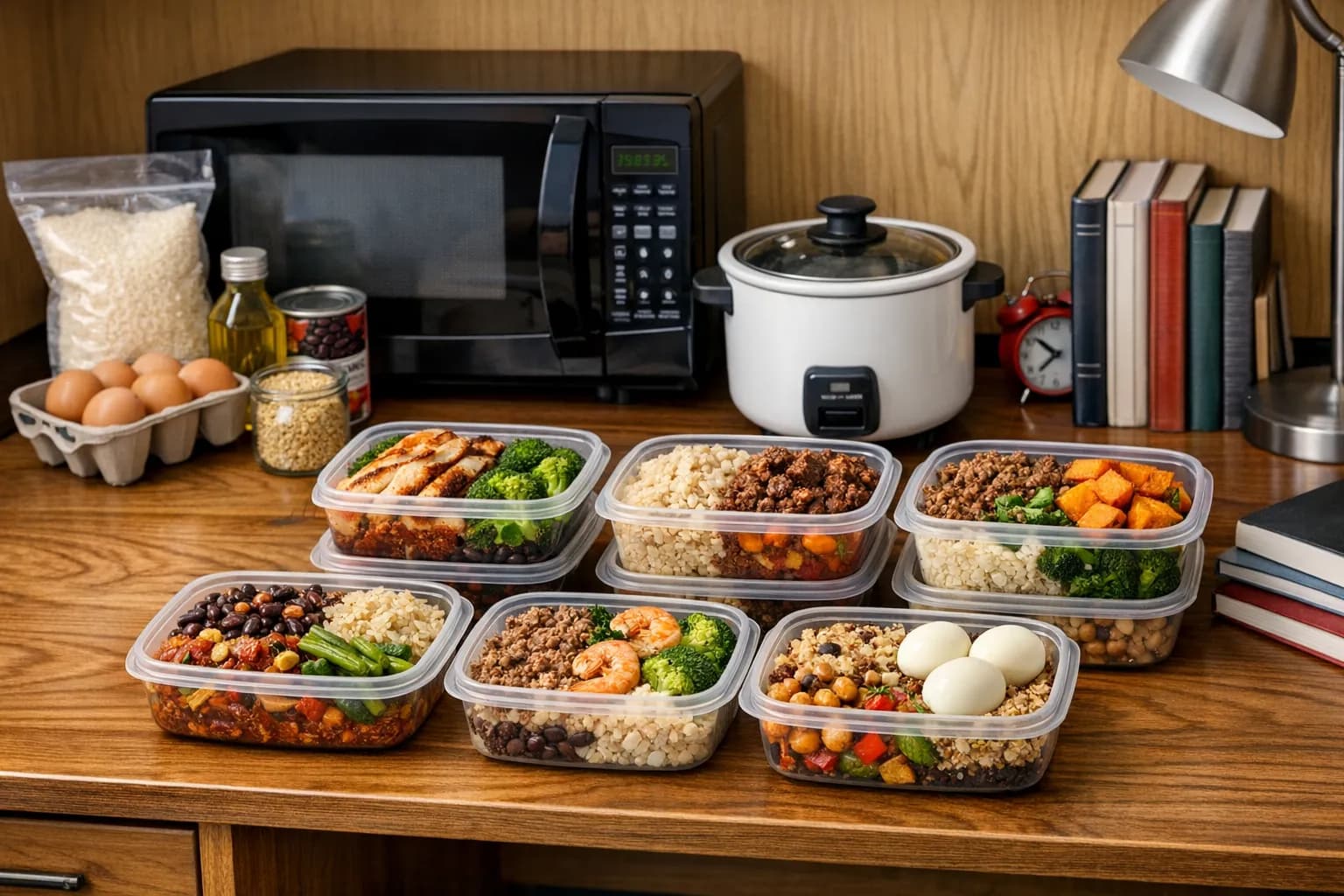
College is the first time most people are fully responsible for feeding themselves, and it shows. The typical college student's diet is a rotation of dining hall food, instant ramen, fast food, and whatever snacks were on sale. The result is predictable: spending more money on food than necessary, feeling sluggish from poor nutrition, and gaining the weight that nobody wants to acknowledge.
Meal prep fixes this, and it does not require a full kitchen, a large budget, or hours of free time that you do not have. It requires a microwave, a mini fridge, one or two inexpensive tools, about an hour per week, and a willingness to spend twenty dollars at the grocery store instead of the same twenty dollars on two fast food meals.
This guide is built specifically for the college context: limited equipment, limited space, limited budget, and limited time. Every recipe works with a microwave and at most a rice cooker or hot plate. Every grocery list prioritizes cost per meal. And every strategy accounts for the fact that you are a student first and a home cook a distant second.
The Equipment You Actually Need
You do not need a full kitchen. You need a few inexpensive tools and you are set for four years.
Essential (Under $50 Total)
- A microwave. Most dorms have one. If yours does not, a basic model costs $40 to $60 and is the single best investment you will make in college nutrition.
- A rice cooker ($15-25). This is your secret weapon. Despite the name, it cooks far more than rice: quinoa, oatmeal, steamed vegetables, soups, and even simple pastas. Many dorms allow rice cookers even when they ban hot plates. A rice cooker with a steamer basket is ideal.
- Glass meal prep containers (set of 5, $15-20). These replace disposable containers, last years, go from fridge to microwave, and make you far more likely to eat what you prepare because the food is visible and accessible.
- A good knife and small cutting board ($10-15). Even if all you are doing is chopping vegetables and slicing cheese. A dull knife on a paper plate is how people hurt themselves.
Nice to Have
- An electric kettle ($15-20). Boils water in 2 minutes for oatmeal, instant noodles upgraded with real ingredients, tea, and coffee. Also useful for couscous, which cooks in boiling water and requires zero active cooking.
- A mini blender ($20-30). For smoothies, which are the fastest way to get fruits, vegetables, and protein into one meal. Blend, drink, rinse, done.
- A hot plate or induction burner ($25-35). Only if your housing allows it. Opens up stovetop cooking — eggs, stir-fries, pasta, and pan-cooked proteins. Check your dorm's rules first.
Ready to simplify your meal planning?
Join MyMenu and get AI-generated recipes tailored to your preferences, dietary needs, and schedule.
Download the AppThe $30-40 Weekly Grocery List
This list feeds one person for a full week at approximately $4 to $5 per day. Prices vary by region but the principle holds: buy staples in bulk and produce strategically.
Staples (Buy Monthly, ~$15-20/month)
- Rice (5 lb bag) — $3-5
- Dried pasta (2 lbs) — $2-3
- Rolled oats (large canister) — $3-4
- Canned beans — black, chickpeas, kidney (buy 4-6 cans) — $4-6
- Peanut butter (large jar) — $3-4
- Olive oil or vegetable oil — $3-5
Weekly Fresh Items (~$20-25)
- Eggs (1 dozen) — $2-4
- Chicken thighs or drumsticks (1-2 lbs) — $3-5
- Bananas (bunch) — $1-2
- Frozen vegetables (2-3 bags: broccoli, stir-fry mix, spinach) — $3-5
- Bread (whole wheat loaf) — $2-3
- Cheese (block, not pre-shredded — it is cheaper) — $2-4
- Onions (3 lb bag) — $2
- Canned diced tomatoes (2 cans) — $2
- Greek yogurt (large tub, plain) — $4-5
- Seasonal fruit on sale — $2-3
The Price Per Meal Breakdown
Using this grocery list, here is what meals actually cost:
- Breakfast (oatmeal with banana and peanut butter): $0.60
- Lunch (rice and beans with frozen vegetables): $0.80
- Dinner (chicken thighs with rice and steamed broccoli): $1.80
- Snacks (yogurt, fruit, peanut butter toast): $1.20
- Daily total: approximately $4.40
Compare this to the alternatives: a fast food meal averages $8 to $12. A campus dining hall meal plan averages $10 to $15 per meal. Even a basic sandwich from a campus cafe is $6 to $8. Meal prepping saves you $100 to $200 per month compared to eating out for every meal.
Tip
Shop at Aldi, Lidl, Walmart, or ethnic grocery stores for the best prices. Farmers markets at the end of the day often sell produce at steep discounts rather than packing it back up. And never shop hungry — you will spend 20 to 30 percent more on impulse purchases.
10 College Meal Prep Recipes (Minimal Equipment Required)
These recipes use the equipment and grocery list above. Each takes 30 minutes or less of active time and produces 3 to 5 servings.
1. Overnight Oats (5 Minutes Prep, Makes 3 Breakfasts)
In each of three containers: 1/2 cup rolled oats, 1/2 cup milk or yogurt, 1 tablespoon peanut butter, 1/2 sliced banana, dash of cinnamon. Refrigerate overnight. Eat cold in the morning. No cooking required.
Cost per serving: $0.55
2. Rice Cooker Chicken and Rice (15 Minutes Prep)
Season 2 chicken thighs with garlic powder, paprika, salt, and pepper. Place on top of 1.5 cups rice and 2 cups water in the rice cooker. Add 1 cup frozen vegetables. Press cook. The chicken steams while the rice cooks underneath. Done in 25 minutes.
Cost per serving: $1.50
3. Black Bean Quesadillas (10 Minutes)
Mash half a can of black beans with cumin and garlic powder. Spread on a tortilla, add shredded cheese, fold in half. Microwave for 90 seconds or cook in a skillet if you have a hot plate. Serve with salsa and sour cream.
Cost per serving: $0.75
4. Egg Fried Rice (15 Minutes)
Use leftover rice from recipe 2. Scramble 2 eggs in a skillet or microwave-safe bowl. Mix with the cold rice, 1 cup frozen stir-fry vegetables (microwaved), soy sauce, and sesame oil if you have it. Microwave the combined ingredients for 2 minutes, stir, microwave 1 more minute.
Cost per serving: $0.85
5. Pasta with Meat Sauce (20 Minutes)
Cook pasta according to package directions (electric kettle works for boiling water, cook the pasta in it or transfer to a pot). Brown ground beef or turkey if you have a hot plate, or microwave-steam it: crumble into a microwave-safe bowl, cover, and microwave in 2-minute intervals, draining fat. Mix with canned diced tomatoes, Italian seasoning, garlic powder, and a pinch of sugar. Makes 4 servings.
Cost per serving: $1.20
6. Buddha Bowl (10 Minutes Assembly)
Combine in a container: 1/2 cup cooked rice, 1/2 cup canned chickpeas (drained and rinsed), 1 cup frozen roasted vegetables (microwaved), 1/4 avocado (when affordable). Drizzle with olive oil and lemon juice. Add hot sauce.
Cost per serving: $1.10
7. Loaded Sweet Potato (10 Minutes)
Poke holes in a sweet potato, microwave for 5 to 7 minutes until soft. Split open and top with canned black beans (warmed), shredded cheese, a dollop of Greek yogurt, and hot sauce. This is a complete meal with complex carbs, protein, and fat.
Cost per serving: $1.00
8. Rice Cooker Soup (10 Minutes Prep)
Add to rice cooker: 2 cups broth (or water with bouillon cube), 1 can diced tomatoes, 1 can beans, 1 cup frozen vegetables, diced onion, garlic, Italian seasoning. Press cook. Makes 3 to 4 servings. Stores well for 4 days.
Cost per serving: $0.90
9. Peanut Butter Banana Smoothie (5 Minutes)
Blend: 1 banana, 2 tablespoons peanut butter, 1 cup milk, 1/2 cup Greek yogurt, handful of ice. Add a handful of spinach if you have it — you will not taste it. This is 400+ calories of balanced nutrition in 3 minutes.
Cost per serving: $1.00
10. Tuna and White Bean Salad (5 Minutes, No Cooking)
Drain 1 can tuna and 1 can white beans. Combine with diced red onion, olive oil, lemon juice, salt, and pepper. Eat on bread, in a wrap, or over greens. High protein, no cooking, no equipment beyond a can opener.
Cost per serving: $1.30
The Sunday Prep Session (1 Hour)
Dedicate one hour on Sunday to prepare food for the week. This single hour eliminates the daily decision of "what am I going to eat" and removes the temptation to order food when you are hungry between classes.
Minutes 1-10: Start rice in the rice cooker (2 cups dry, makes enough for 4-5 meals). Start overnight oats for Monday through Wednesday.
Minutes 10-25: If you have a hot plate: cook 1.5 lbs chicken thighs seasoned with your preferred spices. If you only have a microwave: bake chicken thighs at a friend's kitchen, use canned chicken, or buy a rotisserie chicken ($5-7 at most grocery stores — the best value in the store).
Minutes 25-40: Microwave-steam frozen vegetables in batches. Drain and season. Open and drain cans of beans. Chop any fresh vegetables.
Minutes 40-55: Assemble meals into containers. Rice on one side, protein on the other, vegetables alongside. Make 4-5 containers.
Minutes 55-60: Clean up, label containers with the day, and stack in the mini fridge.
For the rest of the week, lunch and dinner are grab-and-microwave. Breakfast is overnight oats or a quick smoothie. Total time spent on food for the entire week: 1 hour of prep plus about 10 minutes per day for breakfast and reheating. Compare that to the 30 to 45 minutes per meal that cooking from scratch every time would take.
Warning
Food safety matters, especially with a mini fridge. Keep cooked food for no more than 4 days. If you prep on Sunday, eat through your containers by Wednesday or Thursday. For Thursday through the weekend, either do a second smaller prep on Wednesday or rely on no-cook meals like the tuna salad and overnight oats. Never leave cooked food at room temperature for more than 2 hours.
Surviving Without a Dining Hall
If you live off campus or your meal plan has run out, you need a strategy beyond "figure it out each day."
The $5 Daily Meal Framework
- Breakfast ($0.50-0.75): Oatmeal, overnight oats, eggs, or PB toast
- Lunch ($0.80-1.20): Rice and beans, soup, or leftovers from dinner
- Dinner ($1.50-2.00): The most substantial meal — protein, grain, vegetable
- Snacks ($0.50-1.00): Fruit, yogurt, peanut butter with anything
This framework keeps you within $3.50 to $5 per day while covering your nutritional basics. It is not glamorous, but it is balanced, filling, and sustainable for an entire semester.
When to Use the Dining Hall Strategically
If you do have some dining hall meals, use them for the meals that are hardest to replicate cheaply on your own: breakfast (all-you-can-eat eggs, fruit, and toast) and lunches with salad bars where you can load up on vegetables. Save your meal prep for dinners and snacks, which are the meals where you have the most control and where takeout temptation is highest.
Building the Habit
The students who successfully meal prep long-term share a few things in common.
They start small. Do not try to prep every meal in week one. Start by prepping just your lunches for the first two weeks. Once that feels routine, add dinners. Once that feels routine, add breakfasts.
They batch with friends. Meal prepping with a roommate or friend makes it social rather than tedious. Split ingredient costs on recipes you both eat, share equipment, and hold each other accountable. Two people can prep 10 meals in the same time it takes one person to prep 5.
They accept imperfection. Not every prepped meal will be Instagram-worthy. Some weeks you will eat the same rice and beans four times. That is fine. The goal is not culinary excellence — it is eating reasonably well without going broke or subsisting entirely on delivery apps.
For generating weekly meal plans tailored to your budget and available equipment, MyMenu can create plans based on your dietary preferences and cooking constraints.
Key Takeaway
College meal prep requires only a microwave, a rice cooker, and $30-40 per week in groceries to eat well for an entire week at roughly $4-5 per day. Dedicate one hour on Sunday to cooking rice, preparing protein, and assembling 4-5 containers. Stock monthly staples (rice, pasta, oats, canned beans, peanut butter) and buy fresh items weekly (eggs, chicken, frozen vegetables, fruit). Start by prepping just lunches for two weeks, then expand. The habit saves $100-200 per month compared to eating out and builds skills you will use for the rest of your life.