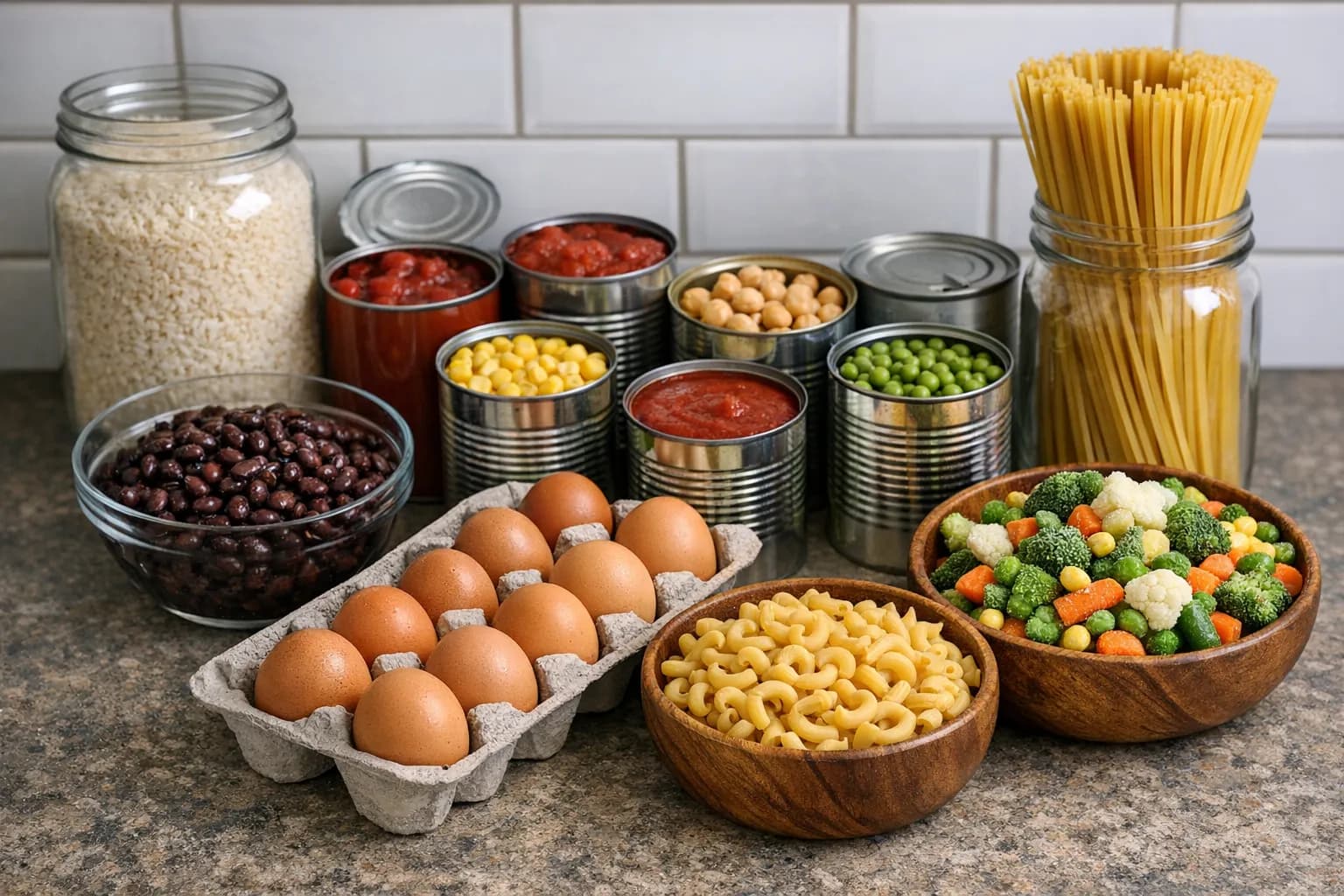
Weekly Meal Plan for a Family of 4 on a Budget ($75-100)
A complete 7-day meal plan for a family of 4 that keeps grocery costs between $75 and $100. Includes budget-friendly recipes, batch cooking strategies, and smart shopping tips.
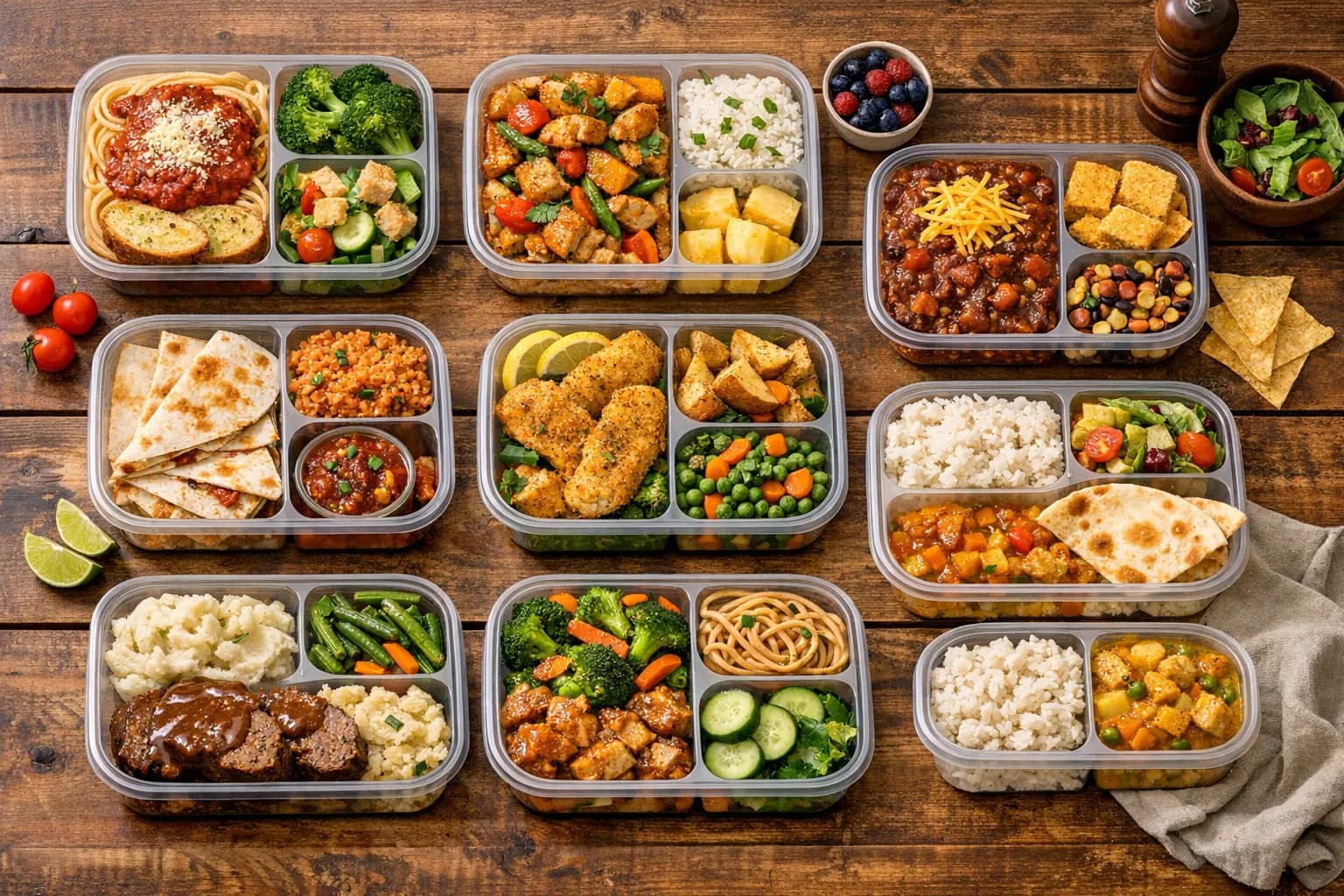
Feeding a family of four three meals a day adds up to 84 meals a week. Without a plan, grocery spending creeps upward through impulse buys, wasted produce, and last-minute takeout orders when nobody knows what is for dinner. The USDA estimates that a "thrifty" food plan for a family of four costs roughly $250 per week, but with strategic meal planning, you can cut that number dramatically and still eat well.
This guide provides a full 7-day meal plan that keeps your weekly grocery bill between $75 and $100. Every meal is designed around affordable, widely available ingredients. The plan also relies on batch cooking and intentional leftovers so you spend less time in the kitchen during busy weekday evenings.
The key insight behind budget meal planning is not about eating less or eating boring food. It is about choosing ingredients that do double duty across multiple meals, buying what is in season, and building a pantry of staples that stretch every dollar further.
The Complete 7-Day Budget Meal Plan
Here is the full week at a glance. Every meal serves four people, and most dinners produce enough leftovers to cover at least one lunch the following day.
| Day | Breakfast | Lunch | Dinner |
|---|---|---|---|
| Monday | Oatmeal with banana and cinnamon | Black bean quesadillas with salsa | One-pot chicken and rice with frozen vegetables |
| Tuesday | Scrambled eggs with toast | Leftover chicken and rice bowls | Pasta with homemade marinara sauce and a side salad |
| Wednesday | Yogurt parfait with granola and frozen berries | Pasta salad with leftover marinara vegetables | Slow cooker lentil soup with crusty bread |
| Thursday | Peanut butter banana toast | Leftover lentil soup | Sheet pan chicken thighs with roasted potatoes and carrots |
| Friday | Oatmeal with peanut butter and honey | Chicken and potato wraps from Thursday leftovers | Homemade bean and cheese burritos with rice |
| Saturday | Pancakes with frozen berries | Fried rice with leftover rice and scrambled eggs | Baked potato bar with broccoli, cheese, and chili |
| Sunday | French toast with cinnamon | Loaded baked potato soup from leftover potatoes | Chicken stir-fry with vegetables and rice |
Monday
Tuesday
Wednesday
Thursday
Friday
Saturday
Sunday
This plan is built around a few core proteins (chicken thighs, eggs, beans, and lentils) and starches (rice, pasta, potatoes, and bread) that appear in different forms throughout the week. The variety comes from changing the seasonings, preparation methods, and accompanying vegetables rather than buying a completely different set of ingredients every day.
Ready to simplify your meal planning?
Join UseMealPlanner and get AI-generated recipes tailored to your preferences, dietary needs, and schedule.
Download the AppWhy This Plan Costs $75-100
The budget for this meal plan breaks down into five main categories. Here is roughly how the spending distributes across a typical grocery trip.
Proteins (~$25-30)
- Chicken thighs (bone-in, skin-on): About 4-5 pounds for the week at $1.50-2.00 per pound. Thighs are significantly cheaper than breasts and more forgiving to cook. They appear in Monday's dinner, Thursday's dinner, and Sunday's stir-fry.
- Eggs (2 dozen): Around $4-6. Eggs show up in breakfasts, the fried rice, and as binders in various dishes.
- Dried lentils and canned black beans: $3-4 total. Dried lentils cost a fraction of canned, and one pound makes enough soup for 8 servings.
Starches (~$10-12)
- Rice (long grain white, 5 lb bag): $4-5. This single bag covers rice for Monday, Friday, Sunday, and Saturday's fried rice.
- Pasta (2 pounds): $2-3.
- Potatoes (5 lb bag): $3-4. Used Thursday through Saturday.
- Bread and tortillas: $4-5.
Produce (~$15-20)
- Bananas, onions, carrots, garlic: These are among the cheapest produce items year-round.
- Frozen vegetables and berries: Often cheaper than fresh, with zero waste since you use only what you need.
- A head of broccoli, a bag of salad mix, a few tomatoes: Round out the fresh vegetable needs.
Dairy and Pantry (~$15-20)
- Cheese (block, not shredded): $4-5. Block cheese is cheaper per ounce and melts better.
- Yogurt, milk, butter: $6-8.
- Peanut butter, oats, canned tomatoes: Pantry staples that last well beyond a single week.
Seasonings and Staples (~$5-10)
If you already have oil, salt, pepper, cinnamon, cumin, garlic powder, and soy sauce on hand, this drops close to zero. If you are building a pantry from scratch, budget a bit more for the first trip but know these items will last for months.
Batch Cooking Strategies That Cut Costs and Time
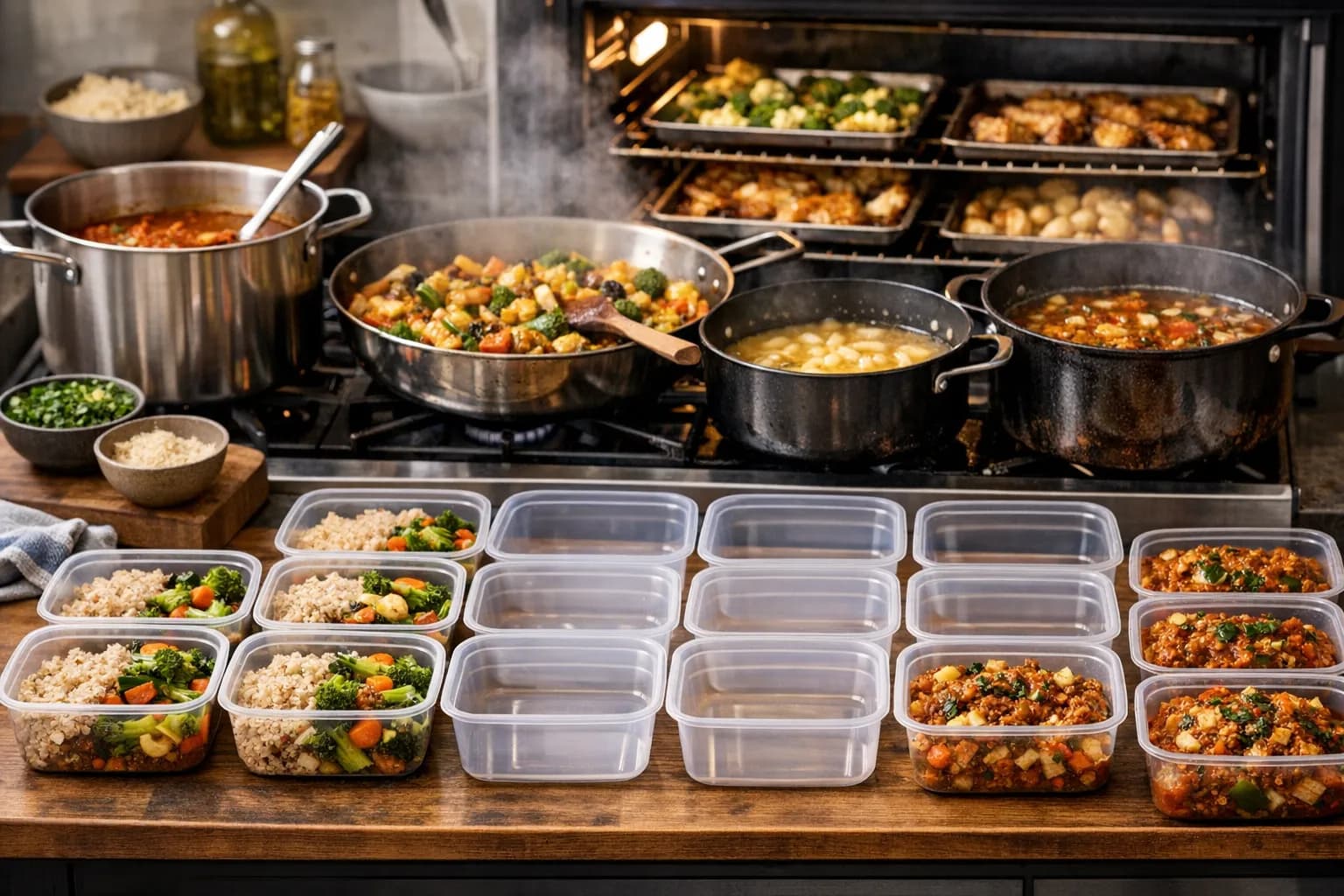
The meal plan above is designed so that several cooking sessions produce food for multiple meals. Here is how to structure your prep.
Sunday Prep Session (60-90 minutes)
Use Sunday afternoon to get ahead of the week. This single session eliminates most weeknight cooking stress.
- Cook a large pot of rice. Make enough for Monday, Friday, and to have extra for Saturday's fried rice. Cooked rice keeps well in the fridge for 4-5 days.
- Prep the chicken thighs. Season 4-5 pounds and divide into portions. Cook Monday's batch. Store Thursday's portion marinated in the fridge and Sunday's in the freezer.
- Chop onions, carrots, and garlic. Do all of it at once and store in containers. These three aromatics appear in nearly every dinner.
- Make a batch of granola if you want to skip buying it packaged. Oats, a bit of oil, honey, and whatever nuts are on sale. Fifteen minutes of oven time gives you breakfast topping for the entire week.
Midweek Check (Wednesday)
On Wednesday, start the slow cooker lentil soup before you leave for the day or during the afternoon. Lentils do not need pre-soaking, so you can go from dry lentils to finished soup in about 4 hours on low heat. This produces enough for Wednesday dinner and Thursday lunch.
The Leftover Ladder
The most important budget principle in this plan is what professional kitchens call the "leftover ladder" — each meal intentionally transforms into the next.
- Monday's chicken and rice becomes Tuesday's chicken rice bowls with a different sauce.
- Tuesday's pasta and marinara becomes Wednesday's pasta salad served cold with olive oil.
- Thursday's sheet pan chicken and potatoes becomes Friday's chicken and potato wraps.
- Saturday's baked potatoes become Sunday's loaded potato soup.
This is not eating the same meal twice. It is using the same base ingredients in a different preparation so nothing goes to waste and no one feels like they are eating leftovers.
Smart Shopping Rules for Budget Meal Planning
Buy Whole, Not Pre-Cut
A whole chicken is cheaper per pound than chicken breasts. A block of cheese is cheaper than shredded. A head of lettuce is cheaper than a bagged salad kit. The extra few minutes of prep saves meaningful money every single week.
Prioritize Seasonal Produce
In-season produce is cheaper and tastes better. In winter, lean toward root vegetables (carrots, potatoes, sweet potatoes, onions), cabbage, and citrus. In summer, shift to zucchini, tomatoes, corn, and peppers. Frozen vegetables are always in season and always affordable — they are picked and frozen at peak ripeness, so the nutrition is comparable to fresh.
Build a Rotating Pantry
The most budget-efficient approach to cooking is maintaining a well-stocked pantry of versatile staples that you replenish gradually rather than buying everything from scratch each week. Your core pantry should include:
- Grains: Rice, oats, pasta, flour
- Canned goods: Diced tomatoes, black beans, chickpeas, tomato paste
- Dried goods: Lentils, dried herbs, bouillon cubes
- Oils and vinegars: Olive oil, vegetable oil, vinegar
- Seasonings: Salt, pepper, cumin, paprika, garlic powder, chili powder, cinnamon, soy sauce
Once this pantry is established, your weekly grocery runs focus primarily on proteins, produce, and dairy — the perishable items — while the pantry handles flavor and bulk.
Use the Unit Price, Not the Sticker Price
Every grocery store displays a unit price (cost per ounce, per pound, or per count) on the shelf label. Train yourself to look at this number instead of the total price. A $4 bag of rice that gives you 25 servings is radically cheaper per serving than a $2 box of flavored rice mix that serves four. The larger container almost always wins on unit price, as long as you will actually use it before it expires.
Tip
When you find proteins on sale, buy in bulk and freeze in meal-sized portions. Chicken thighs, ground beef, and pork shoulder all freeze well for 3-4 months. Label each bag with the date and weight so you can pull exactly what you need for the week's plan.
Scaling the Plan for Larger or Smaller Families
This meal plan serves four, but families come in all sizes. If you are cooking for two, halve the recipes but keep the batch cooking structure — you will simply have more meals covered by leftovers. If you are feeding six or eight, scale the recipes up proportionally.
Scaling recipes accurately is worth learning properly. It is not always as simple as doubling everything — seasonings, leavening agents, and cooking times all behave differently at different scales. For a thorough walkthrough of the process, read How to Scale a Recipe for Any Number of Servings.
For quick scaling math, the Recipe Scaler tool lets you enter any recipe and instantly recalculate ingredient quantities for your target number of servings.
Free Tool
Recipe Scaler
Instantly adjust any recipe to match your family size with our free calculator.
How to Adapt This Plan to Your Family
No meal plan survives first contact with a real family's preferences without some modification. Here are the most common adjustments.
Dietary Restrictions
- Vegetarian: Replace chicken with extra beans, lentils, or tofu. The stir-fry, burritos, and baked potato bar all work seamlessly without meat.
- Gluten-free: Swap pasta for rice noodles, use corn tortillas instead of flour, and replace bread with gluten-free alternatives.
- Dairy-free: Use nutritional yeast or dairy-free cheese on the baked potatoes and burritos. Oat milk works in oatmeal and pancakes.
For any substitution you are unsure about, the Ingredient Substitution Finder can suggest reliable swaps that maintain the flavor and texture of the original dish.
Picky Eaters
If you have children who resist certain ingredients, the structure of this plan actually helps. Many of the meals — quesadillas, burritos, baked potatoes, pasta — let each family member customize their own plate. Offer the base components and let everyone build their own.
For more strategies on handling selective eating, see Meal Planning for Picky Eaters, which covers gradual exposure techniques and kid-friendly modifications.
Adjusting the Budget
If $75-100 is still tight, there are further cuts available:
- Replace chicken entirely with eggs and legumes for the week's protein
- Use only frozen vegetables instead of any fresh produce
- Make bread instead of buying it (flour, yeast, salt, and water makes a loaf for under $0.50)
- Skip yogurt and make oatmeal the daily breakfast
If you have a bit more room in the budget, upgrade by adding one or two fresh fish meals, more variety in produce, or higher-quality proteins like organic chicken.
Measuring What You Actually Spend
The most powerful budget tool is awareness. For the first two weeks of following a meal plan, save every grocery receipt and total the actual cost. Most families discover they are spending far more than they estimated before they started planning, and the simple act of tracking creates accountability that leads to better decisions.
After a month of planned meals, compare your total grocery spending against the month before you started. The savings are typically 20-40 percent — not because you are eating less, but because you are wasting less and making fewer unplanned purchases.
When converting between measurement systems or adjusting quantities from recipes you find online, the Unit Converter helps you quickly translate between cups, grams, ounces, and milliliters so you can shop and cook with precision.
Key Takeaway
A family of four can eat well on $75-100 per week by building meals around affordable staples (chicken thighs, rice, pasta, beans, eggs, and seasonal produce), cooking in batches that intentionally create leftovers for future meals, and shopping with a list based on a concrete weekly plan. The biggest savings come not from cutting quality but from eliminating waste — buying only what you will use, transforming leftovers into new meals, and avoiding the impulse purchases and last-minute takeout orders that happen when there is no plan in place.
Ready to simplify your meal planning?
Join UseMealPlanner and get AI-generated recipes tailored to your preferences, dietary needs, and schedule.
Download the App