Meal Planning for Picky Eaters: Strategies That Actually Work
Practical meal planning strategies for families with picky eaters. Includes a 7-day kid-friendly meal plan, gradual exposure tips, and hidden vegetable techniques that do not backfire.
Every family has at least one member who will not eat mushrooms, refuses anything green, or declares that a perfectly good casserole is "weird." Picky eating is one of the most common and most exhausting challenges in family cooking. It turns meal planning — already a demanding task — into a negotiation where half the table seems to operate from a completely different menu.
The good news is that picky eating is normal, especially in children between ages 2 and 10, and it is almost always manageable with the right approach. The frustration most parents feel comes not from the pickiness itself but from feeling unprepared for it. When you sit down on Sunday night without a plan and try to think of something everyone will eat, the mental load is enormous. When you have a framework and a rotating set of meals that account for selective eaters from the start, weeknight dinners stop being a battle.
This guide covers the strategies that actually work — not gimmicks, but evidence-based approaches that feeding therapists and pediatric nutritionists recommend — along with a complete 7-day meal plan designed to keep picky eaters fed and gradually expand what they are willing to try.
Understanding Why Kids (and Adults) Are Picky
Before diving into tactics, it helps to understand what drives selective eating. Picky eating is not defiance or manipulation. It usually comes from one or more of these root causes.
Sensory sensitivity. Some children are genuinely more sensitive to textures, temperatures, and strong flavors. A food that tastes mildly bitter to an adult can taste intensely bitter to a child because children have more taste buds per square centimeter. Slimy textures (cooked mushrooms, okra) and mixed textures (stew, casserole) are common triggers.
Neophobia — fear of new foods. This is a well-documented developmental phase, typically peaking between ages 2 and 6. It served an evolutionary purpose: toddlers learning to walk and explore are less likely to poison themselves if they instinctively reject unfamiliar foods. The tendency fades with age, but pressuring a neophobic child to eat something new almost always backfires and can extend the phase.
Autonomy and control. For children who have limited control over their daily lives, food is one area where they can exercise choice. Refusing a food is sometimes less about the food itself and more about asserting independence. This is especially common during ages 3-5 and again in the early teen years.
Learned patterns. If a child has had a negative experience with a food — gagging, being forced to eat it, or associating it with a stressful mealtime — they will avoid it long after the original experience is forgotten.
Understanding the "why" matters because it changes your approach. You do not solve a texture sensitivity with bribery, and you do not resolve a control issue by removing all choices.
Ready to simplify your meal planning?
Join UseMealPlanner and get AI-generated recipes tailored to your preferences, dietary needs, and schedule.
Download the AppThe Division of Responsibility: The Framework That Works
The most effective approach to feeding picky eaters comes from registered dietitian Ellyn Satter, and it is called the Division of Responsibility in Feeding. The concept is simple.
The parent decides what is served, when it is served, and where it is eaten. You plan the meals, set the schedule, and create a calm eating environment.
The child decides whether to eat and how much to eat. You do not pressure, bribe, reward, or punish around food. You present the meal, everyone eats together, and each person serves themselves from what is available.
This sounds permissive, but it is actually the opposite. You are not making separate meals for the picky eater. You are serving the same family meal with at least one component you know the selective eater will accept. Over time, repeated neutral exposure to the other foods on the table does the work of expanding their palate — without the power struggles that make mealtimes miserable.
This framework shapes the entire meal plan below.
The 7-Day Picky-Eater-Friendly Meal Plan
Every dinner in this plan includes at least one "safe food" component that most selective eaters will accept (plain rice, bread, pasta, fruit, or a familiar protein) alongside other dishes that offer exposure to new flavors and textures without pressure.
| Day | Breakfast | Lunch | Dinner |
|---|---|---|---|
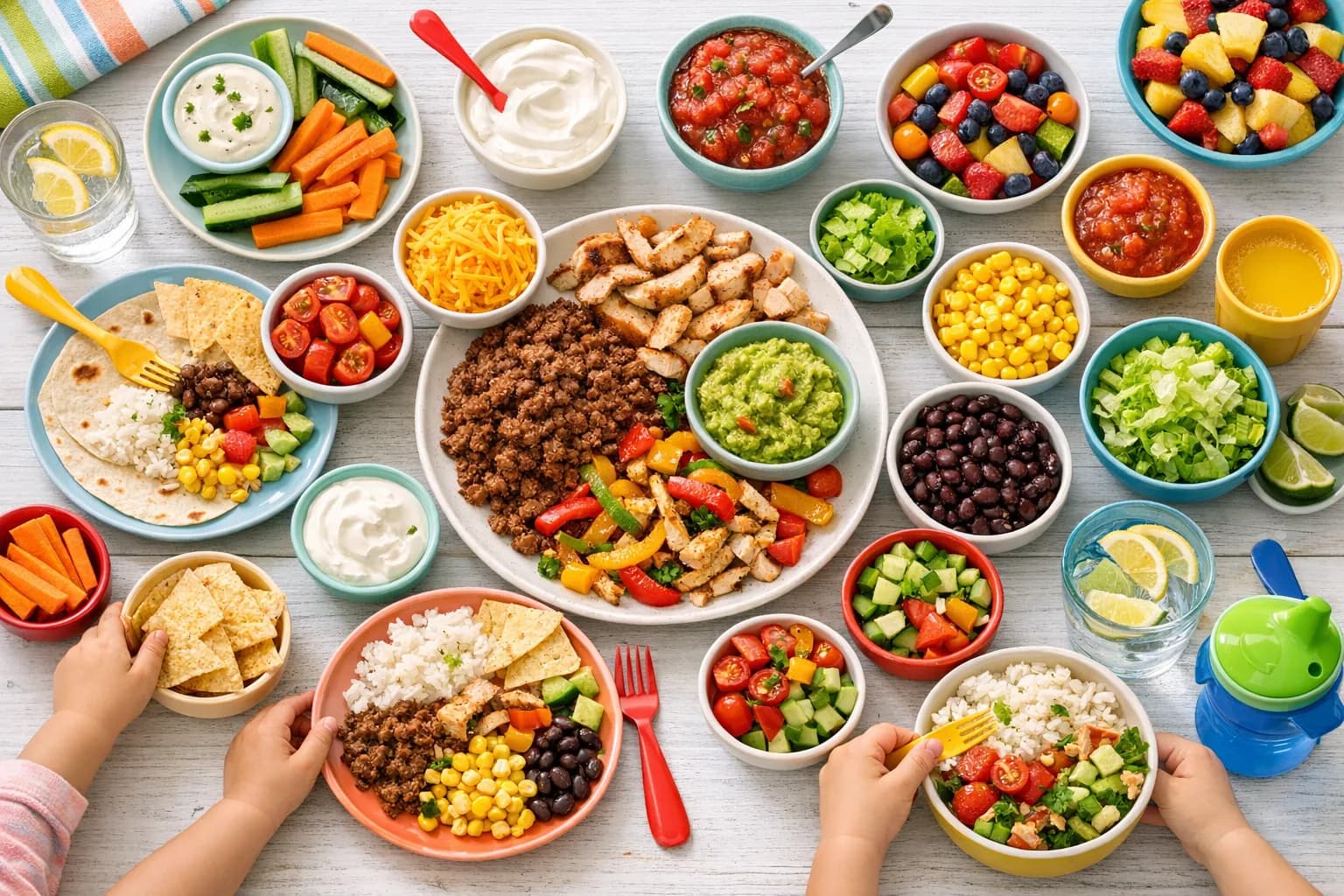
| Monday | Peanut butter and banana toast | Cheese quesadillas with mild salsa and apple slices | Build-your-own tacos with seasoned ground turkey, shredded cheese, lettuce, diced tomato, and plain tortillas |
| Tuesday | Yogurt with granola and blueberries | Pasta with butter and parmesan, carrot sticks on the side | Baked chicken drumsticks with mashed potatoes and steamed broccoli trees |
| Wednesday | Scrambled eggs with toast fingers | Ham and cheese roll-ups with cucumber slices and crackers | Homemade pizza night — individual flatbreads with sauce, cheese, and optional vegetable toppings |
| Thursday | Oatmeal with honey and diced apple | Peanut butter and jelly sandwich with banana | Chicken fried rice with finely diced carrots, peas, scrambled egg, and soy sauce |
| Friday | Pancakes with strawberries | Cheese and bean quesadillas with guacamole on the side | Spaghetti with hidden-veggie marinara sauce and garlic bread |
| Saturday | French toast sticks with maple syrup | Grilled cheese sandwiches with tomato soup for dipping | Baked potato bar — butter, cheese, chili, broccoli, sour cream as toppings |
| Sunday | Banana smoothie with spinach, peanut butter, and yogurt | Chicken nuggets (homemade) with sweet potato fries and ketchup | Mild chicken curry with rice and naan bread |
Monday
Tuesday
Wednesday
Thursday
Friday
Saturday
Sunday
Why This Plan Works for Selective Eaters
Every meal has a safe anchor. Monday's tacos always include plain tortillas and shredded cheese. Thursday's fried rice always includes plain rice on the side. Saturday's baked potatoes are fundamentally just butter and a potato. Even if a child rejects every topping and filling, they will not go hungry.
Build-your-own meals appear frequently. Tacos (Monday), pizza (Wednesday), and the baked potato bar (Saturday) all let each family member assemble their own plate. This gives selective eaters control without requiring a separate meal. Research consistently shows that children eat more and try more when they have autonomy over assembly.
New foods appear alongside familiar ones. Sunday's mild chicken curry is paired with rice and naan — two foods that almost every child will eat. The curry itself is exposure. They do not have to eat it, but it is there, and over weeks and months of seeing it on the table, the chances of them trying it increase dramatically.
Vegetables are presented in multiple formats. Broccoli appears as steamed "trees" on Tuesday and as an optional baked potato topping on Saturday. Carrots appear as raw sticks on Tuesday and finely diced in fried rice on Thursday. Children who reject a cooked vegetable will sometimes eat it raw, and vice versa. Offering both forms across the week increases the odds of acceptance.
Strategies for Expanding What Picky Eaters Will Try
The Rule of Fifteen
Research on food neophobia shows that a child may need to be exposed to a new food 10 to 15 times before they are willing to try it, and even more exposures before they decide they like it. Most parents give up after 3 to 5 attempts. The mismatch between expectation and reality is the source of most frustration.
Exposure does not mean eating. It means the food appears on the table. The child sees it, smells it, and watches other family members eat it. They might touch it or lick it. All of that counts. Pressuring a child to take a bite short-circuits the natural process and often creates a negative association that makes acceptance less likely, not more.
Keep a low-pressure tracking habit — a simple note on your phone of which new foods have been served and how many times. When you see that tonight is exposure number 11 for roasted sweet potatoes, it is easier to stay patient than when you are thinking "they have rejected this again."
The Flavor Bridge Technique
Instead of introducing completely unfamiliar foods, bridge from accepted foods to similar ones. This works remarkably well because it respects the child's existing preferences while gently expanding them.
- Likes plain pasta? Try pasta with a small amount of butter and parmesan. Then pasta with a light pink sauce (marinara mixed with cream). Then pasta with full marinara.
- Likes chicken nuggets? Try homemade nuggets with a slightly different coating. Then baked chicken strips. Then chicken drumsticks. Then diced chicken in a stir-fry.
- Likes cheese pizza? Add one topping that is mild (sweet corn, mild peppers). Then try two toppings. Then introduce a new sauce variation.
- Likes white rice? Try rice with a small amount of soy sauce. Then fried rice with just egg. Then fried rice with vegetables.
Each step is small enough to feel safe but moves consistently toward a wider range of accepted foods. The Thursday fried rice and Wednesday pizza night in the meal plan above are both designed around this principle.
Hidden Vegetables: When and How to Use Them
Blending vegetables into sauces, smoothies, and baked goods is one of the most popular strategies for getting nutrients into picky eaters, and it does work — with an important caveat.
Hidden vegetables solve the nutrition problem but not the acceptance problem. If the only way your child eats spinach is blended invisibly into a smoothie, they have not learned to tolerate or enjoy spinach. They have learned to drink smoothies. Both strategies — hidden and visible — should run in parallel.
Here are the most effective ways to incorporate vegetables invisibly:
- Marinara sauce: Blend cooked carrots, zucchini, or red bell pepper into tomato sauce. The color stays red, the flavor stays tomatoey, and each serving contains a full portion of vegetables. Friday's dinner in the plan uses this approach.
- Smoothies: Spinach, cauliflower, and frozen zucchini all blend smoothly and disappear into fruit-forward smoothies. Sunday's breakfast smoothie has a full cup of spinach masked by banana and peanut butter.
- Mashed potatoes: Blend in cauliflower (steamed until very soft) at up to a 50/50 ratio. The texture stays creamy and the flavor difference is minimal.
- Baked goods: Zucchini bread, carrot muffins, and sweet potato pancakes are classics for a reason. The sweetness of the baked good overrides the vegetable flavor.
- Fried rice: Finely diced vegetables cook down and become part of the overall texture. Carrots and peas are nearly invisible when diced small and mixed throughout.
Tip
When hiding vegetables, match the vegetable to the dish color. Orange vegetables (carrot, sweet potato, butternut squash) disappear into tomato-based sauces and orange-tinted soups. Green vegetables (spinach, zucchini) disappear into pesto, green smoothies, and chocolate baked goods (the chocolate masks both color and flavor). White vegetables (cauliflower, parsnip) disappear into mashed potatoes, white sauces, and pale soups.
Deconstructing Meals
Many picky eaters resist mixed dishes — casseroles, stews, stir-fries — not because they dislike the individual components but because the combination is overwhelming. A child who happily eats rice, chicken, and broccoli separately may refuse a chicken-broccoli-rice casserole.
The solution is simple: serve the components separately whenever possible. Instead of a mixed stir-fry, put the rice in one section of the plate, the chicken in another, and the vegetables in a third. The picky eater can eat what they are comfortable with. Over time, as they see the components together and watch others combining them, they often start mixing on their own.
This is why the meal plan favors build-your-own formats. A taco bar is a deconstructed taco. A baked potato bar is a deconstructed loaded potato. Pizza night with individual flatbreads lets each person control exactly what goes on their plate.
Handling Common Picky Eating Scenarios
"I do not like it" (Before Tasting)
Respond neutrally: "That is okay, you do not have to eat it. It is there if you want to try it." Then move on. Do not negotiate, explain the nutritional benefits, or tell stories about children in other countries. The less emotional weight food carries, the more likely a child is to explore on their own terms.
Requesting a Different Meal
The key boundary from the Division of Responsibility: you serve one meal, and it includes at least one thing the child will eat. You are not a short-order cook. If they do not want the chicken curry, they can fill up on rice and naan. Tomorrow's dinner will be different. Hunger is not an emergency when the next meal is a few hours away and there are safe foods available on tonight's table.
Food Jags (Wanting the Same Food Every Day)
It is common for young children to fixate on a single food — chicken nuggets every day, or only plain pasta — and refuse everything else. This is almost always a phase. Continue offering the preferred food as part of a varied meal (not as the entire meal), and keep other foods on the table. Most food jags resolve on their own within a few weeks if they are not reinforced by parental anxiety.
Vegetables Specifically
Vegetables are the most commonly rejected food category among picky eaters, and for biological reasons — many vegetables are bitter, and children's palates are more sensitive to bitterness. The vegetables most likely to be accepted first are:
- Sweet vegetables: Corn, sweet peas, sweet potato, carrots, roasted red peppers
- Mild vegetables: Cucumber, iceberg lettuce, raw bell pepper strips
- Vehicles for dip: Almost any vegetable becomes more appealing when paired with ranch dressing, hummus, or ketchup. Let children dip. The goal is exposure and acceptance, not nutritional perfection.
Adapting Recipes When Ingredients Need to Change
Picky eaters often have very specific ingredient preferences, and the fix is frequently a simple substitution rather than an entirely different recipe. If a child will eat chicken but not turkey, or tolerates cheddar but rejects mozzarella, adjust accordingly.
The Ingredient Substitution Finder is useful for identifying reliable swaps that maintain the dish's structure while accommodating preferences. For instance, if your child refuses yogurt in a recipe, the tool can suggest alternatives that serve the same function (moisture, tang, or protein) without triggering a rejection.
When scaling picky-eater-friendly recipes up for a larger gathering or down for a smaller family, the Recipe Scaler keeps proportions accurate so the familiar flavors stay consistent. Picky eaters are often sensitive to even small changes in how a dish tastes, so precise scaling matters more with selective eaters than it does with adventurous ones.
Free Tool
Ingredient Substitution Finder
Find reliable ingredient swaps that keep familiar flavors intact for picky eaters.
Building a Rotation That Prevents Burnout
One of the biggest risks of cooking for picky eaters is parental burnout. When you are making the same six meals on repeat because those are the only things everyone will eat, cooking stops being enjoyable and starts feeling like a chore.
The antidote is a structured rotation with built-in variety. Here is how to build one.
The 4-Week Rotation Method
-
Identify 5-6 dinners that everyone currently accepts. These are your anchor meals. In the plan above, that might be tacos, pasta, pizza, chicken and mashed potatoes, fried rice, and baked potatoes.
-
Add 1-2 "stretch" meals per week. These are meals that include a new element alongside familiar components. Sunday's mild curry with rice is a stretch meal. So is Saturday's tomato soup for dipping (if soup is not yet in the accepted category).
-
Rotate on a 4-week cycle. Write out four different weekly plans, each built around the anchor meals but varying the stretch meals. Cycle through them monthly. This gives you enough variety to avoid monotony while keeping the planning effort low.
-
Swap stretch meals that get accepted into the anchor category. Over time, your roster of accepted meals grows, and you can introduce more adventurous options into the stretch slots.
Keeping Grocery Costs Down
Cooking for picky eaters can drive up grocery costs if you are buying separate ingredients for a "kids' meal" alongside the family dinner. The meal plan above avoids this by designing meals where everyone eats from the same set of ingredients but assembles their plate differently.
For a full budget-focused approach to family meal planning, including batch cooking strategies and a breakdown of weekly grocery costs, see Weekly Meal Plan for a Family of 4 on a Budget. Many of the budget principles in that plan — buying whole chickens, using dried beans, building a pantry of staples — apply directly to picky eater households.
When Picky Eating Might Be Something More
Most picky eating is developmentally normal and resolves with time and patience. However, there are signs that selective eating may warrant professional evaluation:
- Extreme restriction: The child eats fewer than 15-20 foods total, or entire food groups (all proteins, all fruits) are completely absent.
- Weight loss or failure to gain: If pickiness is affecting growth, a pediatrician should be involved.
- Physical symptoms: Gagging, vomiting, or distress at the sight or smell of food may indicate a sensory processing issue or ARFID (Avoidant/Restrictive Food Intake Disorder).
- Social impact: The child cannot eat at friends' houses, restaurants, or school without significant distress.
- No improvement over time: If the Division of Responsibility approach has been consistently applied for 3-6 months without any expansion in accepted foods, a feeding therapist can help.
These situations are uncommon, but they are real, and early intervention produces the best outcomes. A pediatric dietitian or occupational therapist specializing in feeding can assess whether the pickiness is within the normal range or needs targeted support.
Key Takeaway
Effective meal planning for picky eaters is built on three principles: serve one family meal that includes at least one safe food (rather than making separate meals), expose children to new foods repeatedly without pressure (10-15 exposures before expecting acceptance), and use build-your-own meal formats (tacos, pizzas, baked potato bars) that give selective eaters control over their plate while keeping the family eating together. Hidden vegetables solve the nutrition gap in the short term, but parallel visible exposure is what builds long-term acceptance. Most picky eating is a normal developmental phase that resolves with patience, not pressure.
Ready to simplify your meal planning?
Join UseMealPlanner and get AI-generated recipes tailored to your preferences, dietary needs, and schedule.
Download the App