Meal Planning for Beginners: The Complete Guide to Getting Started
Everything you need to start meal planning from scratch. A step-by-step beginner's guide covering why meal planning works, how to build your first weekly plan, essential tools, common mistakes, and how to build a sustainable rotation.
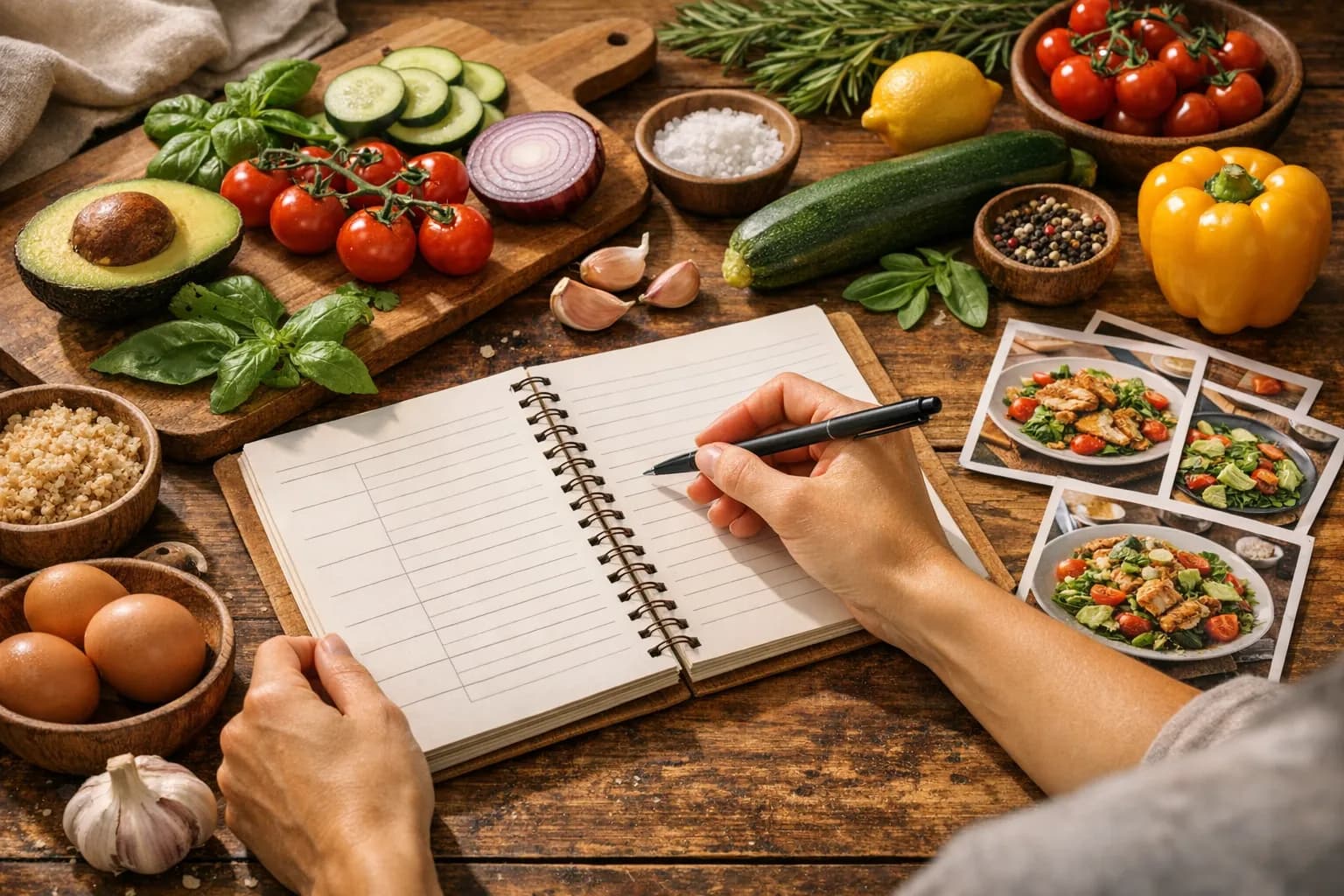
Every night, millions of people stand in their kitchen and ask the same question: "What should we have for dinner?" It seems like a small decision, but it is actually one of the most draining ones you make all day. By the time evening arrives, your decision-making capacity is depleted, the fridge contains ingredients that do not quite go together, and the path of least resistance is ordering takeout or throwing together something unsatisfying.
Meal planning eliminates that question entirely. When you sit down once a week and decide what you will eat for the next seven days, every evening becomes an execution problem instead of a decision problem. The ingredients are in the fridge. The recipe is chosen. The only thing left to do is cook.
This guide is a comprehensive starting point for anyone who has never meal planned before or who has tried and abandoned it. It covers why meal planning works, how to build your first weekly plan step by step, the tools that make it easier, and the mistakes that cause most beginners to quit. By the end, you will have a clear, repeatable process that you can start this weekend.
Why Meal Planning Works
Before getting into the how, it is worth understanding the why, because when meal planning feels tedious (and it will, occasionally), understanding the benefits keeps you going.
You Save Money
The average American household wastes about 30 percent of the food it buys, according to the USDA. That is roughly $1,500 per year thrown directly into the trash. Most of that waste comes from buying ingredients without a plan and then not using them before they spoil.
When you plan your meals, you buy only what you need. The bunch of cilantro does not rot in the crisper because it is allocated to Tuesday's tacos and Thursday's grain bowl. The chicken thighs get cooked on the day you planned rather than sitting in the fridge until they are questionable. The savings are not dramatic on any single trip, but over a year, they compound into hundreds or thousands of dollars.
You Eat Better
When there is no plan, the default is convenience. Convenience foods tend to be higher in calories, sodium, and processed ingredients than home-cooked meals. This is not a moral judgment; it is a nutritional fact. When you plan meals in advance, you naturally end up with more balanced plates because you are choosing recipes with clear eyes rather than grabbing whatever is fastest.
Research published in the International Journal of Behavioral Nutrition and Physical Activity consistently shows that meal planners eat more fruits and vegetables, consume a wider variety of foods, and have better overall dietary quality than non-planners.
You Reclaim Time
This one surprises people. Meal planning takes time upfront, about 20 to 30 minutes per week for planning and an optional 60 to 90 minutes for prep. But it saves far more time during the week. No more aimless grocery store wandering. No more staring into the fridge. No more mid-week emergency trips for the one ingredient you forgot. No more waiting 45 minutes for delivery that you did not really want anyway.
The net time savings for most families is three to five hours per week once the habit is established.
You Reduce Stress
Decision fatigue is real. Every choice you make throughout the day depletes a finite pool of mental energy. By the time dinner rolls around, that pool is empty. Meal planning makes the dinner decision when your mental energy is fresh, typically on a weekend morning, and removes it from the weeknight equation entirely.
Ready to simplify your meal planning?
Join UseMealPlanner and get AI-generated recipes tailored to your preferences, dietary needs, and schedule.
Download the AppStep 1: Assess What You Already Know
Before you plan a single meal, take inventory. You know more than you think. Most people have five to ten meals they cook regularly without thinking. Maybe it is spaghetti with meat sauce, chicken stir-fry, tacos, a sheet pan dinner, or breakfast for dinner. These existing meals are the foundation of your first meal plan.
Write down every meal you already know how to cook. Do not worry about nutrition, variety, or impressiveness. Include everything, even "scrambled eggs and toast" and "pasta with jarred sauce." The goal is to build a starting list of at least seven meals. If you can only think of four or five, that is fine. You will fill in the gaps with simple new recipes.
This exercise matters because the number one reason beginners abandon meal planning is that they try to cook entirely new recipes every week. That is a recipe for burnout. Your first month of meal planning should be at least 70 percent familiar meals.
Step 2: Choose Your Planning Method
There are three common approaches to structuring a weekly meal plan. None is objectively best. Choose the one that fits your brain and your schedule.
The Calendar Method
Write out every meal for every day: breakfast, lunch, dinner, and snacks. This is the most structured approach and works well for people who like certainty and who have predictable schedules. The downside is that it is rigid, and a single disruption (a last-minute dinner invitation, a day you come home late) requires rearranging the plan.
The Component Method
Instead of planning specific meals, you plan components: two proteins, three vegetable preparations, two grains, and a few sauces or dressings. During the week, you mix and match these components into meals. Monday might be chicken over rice with roasted broccoli. Tuesday might be chicken in a wrap with raw vegetables and tahini. Same components, different meals.
This method is more flexible and works well for people who dislike rigid schedules but still want structure. It also adapts well to varying appetites and leftovers.
The Theme Night Method
Assign a theme to each night of the week: Meatless Monday, Taco Tuesday, Stir-Fry Wednesday, Sheet Pan Thursday, Pizza Friday, Leftovers Saturday, Slow Cooker Sunday. The theme narrows your choices without dictating the exact meal. You still need to pick a specific recipe, but "what stir-fry should I make?" is a much easier question than "what should I make for dinner?"
This method works especially well for families because kids learn the routine and know roughly what to expect, which reduces complaints and negotiations.
Tip
Start with whichever method seems easiest, not whichever seems most thorough. You can always switch methods after a few weeks once you have built the habit of planning itself. The method matters less than the consistency of doing it.
Step 3: Build Your First Weekly Plan
Here is the concrete process for planning your first week. This should take about 20 to 30 minutes.
Pick Five Dinners
Start with just five dinners. Leave two nights open for leftovers, eating out, or the "panic meal" (eggs, pasta with butter, frozen pizza) that every household should keep on standby. Five planned dinners is achievable. Seven feels like pressure.
From your list of known meals, pick three. From a cookbook, blog, or AI meal planner, pick two new-to-you recipes that look straightforward. Write them down with the day you will cook each one.
Sequencing tips:
- Put the recipe with the most perishable ingredients early in the week (fish on Monday, not Friday)
- Put the slowest recipe on a day when you have more time (Sunday or a work-from-home day)
- Put the easiest recipe on your busiest day
- If a recipe creates leftovers, schedule a "leftover transformation" the next day (Monday's roast chicken becomes Tuesday's chicken salad)
Plan Breakfasts and Lunches (Keep It Simple)
Breakfast and lunch do not need the same variety as dinner. Most people are perfectly happy eating the same breakfast three or four days in a row and rotating between two lunch options.
Reliable breakfasts: Overnight oats, eggs and toast, yogurt with fruit, smoothies, oatmeal. Pick two and alternate.
Reliable lunches: Leftovers from last night's dinner, a big salad with protein, a sandwich or wrap, soup from a Sunday batch. Pick two or three templates and rotate.
The key insight for beginners is that breakfast and lunch planning is about templates, not recipes. "Eggs with whatever vegetables are in the fridge" is a breakfast plan. "Leftover protein over greens with dressing" is a lunch plan. You do not need to specify every ingredient.
Write the Grocery List
Go through each planned meal and list every ingredient you need. Then check your pantry, fridge, and freezer and cross off anything you already have. The remaining list is your shopping list.
Organize the list by store section (produce, proteins, dairy, pantry) to make your shopping trip faster. This single habit, organizing by section, typically saves 15 to 20 minutes per grocery trip because you stop backtracking through aisles.
Always add to the list:
- The specific quantities you need (not just "chicken" but "2 lbs chicken thighs")
- Any staples that are running low (oil, salt, rice, pasta, butter)
- Planned snacks (fruit, nuts, cheese, hummus, vegetables for dipping)
Step 4: Shop with Purpose
Shopping without a list is the grocery store equivalent of browsing the internet without a purpose: you always end up spending more time and money than intended. With your organized list in hand, shopping becomes a focused task.
The One-Trip Rule
Try to do all your grocery shopping in a single trip per week. Multiple small trips throughout the week lead to impulse purchases, wasted time, and the creeping feeling that meal planning is not actually saving you effort. One trip, in and out, done.
Buy Versatile Ingredients
As a beginner, lean toward ingredients that work in multiple meals. A chicken costs more per pound than chicken thighs, but a whole chicken gives you roast chicken for one dinner, shredded chicken for lunch salads, and bones for homemade broth. A bag of rice serves as a side dish, a stir-fry base, and a burrito filling.
The more each ingredient can multitask, the shorter your grocery list and the less food you waste.
Do Not Buy Aspirational Ingredients
This is a common beginner trap: buying ingredients for the person you want to be rather than the person you are. If you have never cooked with lemongrass, do not buy lemongrass for your first week of meal planning. If you do not normally eat kale, this is not the week to buy a bundle. Stick to ingredients you know you will actually use. As meal planning becomes habitual, you can gradually expand your repertoire.
Step 5: Prep What You Can (Optional but Powerful)
Meal prep is not required for successful meal planning, but it accelerates the benefits dramatically. Even 30 minutes of prep after your grocery trip makes weeknight cooking substantially easier.
High-value prep tasks (in order of impact):
-
Wash and chop vegetables. This is the single most valuable prep task. Chopped onions, sliced bell peppers, and broccoli florets in containers eliminate the most time-consuming step of weeknight cooking.
-
Cook a batch of grains. Rice, quinoa, or farro cooked in bulk and stored in the fridge provides an instant base for meals all week.
-
Marinate proteins. If a recipe calls for marinated chicken or beef, do it now. The protein absorbs more flavor sitting in the fridge overnight than it does in a 20-minute marinade on a weeknight.
-
Make sauces and dressings. A jar of vinaigrette or a batch of stir-fry sauce takes five minutes now and saves five minutes on three different nights.
For a complete Sunday prep system that covers an entire week of dinners in 90 minutes, see Easy Meal Prep for Working Parents. The strategies work for anyone, not just parents.
Step 6: Cook, Eat, and Adjust
During your first week, pay attention to what works and what does not. Not every meal will be a winner. Not every day will go according to plan. That is normal and expected.
Track What You Liked
After each meal, mentally note: Would I make this again? Was the portion size right? Was the recipe too complex for a weeknight? The answers feed directly into next week's plan. After four to six weeks, you will have a solid list of 15 to 20 meals that your household genuinely enjoys, and planning becomes almost effortless because you are selecting from a proven list.
Handle Disruptions Gracefully
Your plan will break. A meeting runs late. The chicken you planned to cook on Tuesday is still frozen. A friend invites you to dinner on the night you planned your most elaborate recipe. This is fine. Swap days around. Push a meal to tomorrow. Use the "panic meal" option.
The critical mindset shift for beginners is this: a plan that is followed 70 percent of the time is infinitely more effective than no plan at all. Do not let one disrupted evening make you abandon the entire system.
Essential Tools for Meal Planning
You do not need expensive tools to meal plan. Here is what actually helps.
Planning Tools
- A simple notebook or whiteboard. Write the week's meals somewhere visible, like on the fridge. When anyone in the household asks "what is for dinner?" they can look at the board instead of asking you.
- A note-taking app. Digital planners work just as well. The advantage is that you can copy last week's plan and modify it rather than starting from scratch.
- An AI meal planner. Tools like UseMealPlanner generate a full week of meals based on your preferences, dietary needs, and family size. This eliminates the recipe-selection step entirely, which is the step where most beginners get stuck.
Kitchen Tools
- A good knife and cutting board. Dull knives make prep tedious and dangerous. A single sharp chef's knife and a large cutting board cut your prep time in half.
- A set of glass storage containers. For storing prepped ingredients and leftovers. Glass does not stain or retain odors, and it goes from fridge to microwave to table.
- A sheet pan. Sheet pan dinners (protein and vegetables on a single pan, baked together) are among the easiest weeknight meals and produce minimal cleanup.
- A slow cooker or Instant Pot. "Dump everything in and walk away" is a cooking method, and for busy schedules, it is often the best one.
Recipe Tools
When you start cooking more regularly, a few tools save time and prevent mistakes.
The Recipe Scaler recalculates ingredient quantities when you need to adjust a recipe for more or fewer servings. This is especially useful when a recipe serves six but you are cooking for two, or when you want to double a recipe for meal prep purposes.
The Unit Converter translates between measurement systems: cups to grams, Fahrenheit to Celsius, ounces to milliliters. It eliminates the mental math when following recipes from different sources.
Free Tool
Recipe Scaler
Adjust any recipe's ingredient quantities to match your exact serving needs.
Common Beginner Mistakes (and How to Avoid Them)
Mistake 1: Planning Too Many New Recipes
The enthusiasm of starting something new leads many beginners to plan seven brand-new recipes for their first week. By Wednesday, they are exhausted from learning unfamiliar techniques and searching for specialty ingredients. By Thursday, the plan is abandoned.
The fix: In your first month, keep at least half your dinners as meals you already know how to cook. Introduce one or two new recipes per week at most. This gives you the excitement of trying something new without the burnout of constant novelty.
Mistake 2: Overcomplicating Meals
Meal planning does not mean every dinner needs to be a complex, multi-component dish. A grilled chicken breast with steamed broccoli and rice is a perfectly valid planned meal. A bowl of soup with bread is a meal. An omelet with a side salad is a meal.
The fix: Aim for a mix of complexity levels. One or two "project" meals per week (a new recipe, a slow-cooked dish) and three or four simple, quick meals. The simple meals keep the system sustainable. For a deep dive into keeping things fast, read How to Meal Plan When You Have No Time: The 15-Minute Method.
Mistake 3: Not Accounting for Leftovers
Cooking a recipe that serves six when your household is two means four servings of leftovers. If you do not plan to eat those leftovers, they go to waste. If you eat them all week, you get bored.
The fix: Plan your leftovers intentionally. Monday's roast chicken becomes Tuesday's chicken wraps. Wednesday's chili becomes Thursday's chili-topped baked potatoes. Transform leftovers into a new meal rather than eating the same dish twice. This approach is detailed in the Weekly Meal Plan for a Family of 4 on a Budget, which shows how a single week's meals can be built around intentional leftover laddering.
Mistake 4: Ignoring Household Preferences
Planning meals that only you want to eat does not work in a household with multiple people. If your partner hates fish and your kids refuse anything with visible vegetables, a week of salmon and vegetable stir-fries is doomed.
The fix: Start with meals the whole household already agrees on. Introduce new ingredients gradually, in familiar formats. A child who will not eat stir-fried vegetables might happily eat the same vegetables in a quesadilla. For specific strategies, see Meal Planning for Picky Eaters.
Mistake 5: Making It All or Nothing
Many beginners approach meal planning as a rigid system that must be followed perfectly. One unplanned meal feels like a failure, and after a few "failures," they conclude that meal planning does not work for them.
The fix: Meal planning is a tool, not a discipline. A week where you followed the plan for four out of seven dinners is still four nights of home-cooked, intentional meals that you would not have had otherwise. Perfection is not the goal. Consistency is.
Building Your Rotation Over Time
The ultimate goal of meal planning is to build a personal rotation of 15 to 20 meals that your household loves. Once you have this rotation, planning a week takes five minutes instead of thirty, because you are just picking from a proven list.
Here is how to build that rotation over the first two months:
Weeks 1-2: Plan five dinners using mostly familiar meals plus one or two new recipes. After each week, mark which meals were winners and which were not.
Weeks 3-4: Drop the meals nobody liked. Keep the winners. Add two new recipes per week. Your running list should now have 10 to 12 reliable meals.
Weeks 5-8: Continue the pattern. By the end of month two, you will have 15 to 20 meals in your rotation. Planning becomes almost automatic: scan the list, pick five, write the grocery list, shop.
From this point, add one or two new recipes per month to keep things fresh, and let the underperformers fall off the list naturally. Your rotation evolves slowly over time rather than requiring reinvention every week.
Adapting Meal Planning for Different Situations
Budget Constraints
If money is tight, meal planning becomes even more valuable because it eliminates food waste, which is the single biggest budget leak in most households. Focus on affordable proteins (eggs, beans, lentils, chicken thighs), buy in-season produce, and build meals around pantry staples. For a complete budget-focused plan, the Weekly Meal Plan for a Family of 4 on a Budget shows how to feed a family on $75-100 per week.
Dietary Restrictions
Meal planning is arguably more important when dietary restrictions are involved, because the consequences of not having a plan (grabbing convenience food) are more likely to conflict with your dietary needs. Whether you are managing gluten-free requirements, vegetarian eating, or calorie-conscious goals, having a plan means you never end up at 7 PM with nothing compliant to eat. For gluten-free specific planning, see Gluten-Free Family Meal Plan.
Solo Meal Planning
Planning for one person has unique challenges: recipes are almost always written for four to six servings, and cooking a full recipe means eating leftovers for days. The solution is either to embrace batch cooking and freeze individual portions, or to halve and quarter recipes using the Recipe Scaler for precise adjustments.
Cooking for Large Groups
On the other end, scaling meals up for gatherings or large families requires its own approach. Doubling a recipe is straightforward for most dishes, but seasoning, cooking times, and liquid ratios do not always scale linearly. The Unit Converter helps with precise conversions, and How to Scale a Recipe covers the nuances of scaling beyond simple multiplication.
Your First Week: A Quick-Start Checklist
If you have read this far and want to start immediately, here is the condensed version:
- Today: Write down every meal you know how to cook. Find one or two new recipes that look interesting and manageable.
- Saturday or Sunday morning (20 minutes): Pick five dinners for the coming week. Assign each to a day. Write a grocery list organized by store section.
- Saturday or Sunday afternoon (30-60 minutes): Shop in one trip. When you get home, chop vegetables, cook a batch of grains, and marinate any proteins.
- Each weeknight: Follow the plan. Cook the assigned meal. Note what worked and what did not.
- The following weekend: Repeat. Keep the winners, drop the losers, add one new recipe.
That is the entire system. It gets easier every week because your recipe list grows, your grocery shopping becomes more efficient, and the habit of planning becomes automatic.
Key Takeaway
Meal planning for beginners comes down to a simple weekly process: choose five dinners (mostly from meals you already know), write a grocery list, shop once, and optionally prep a few components in advance. Start with familiar recipes rather than all-new ones, keep some nights open for leftovers or flexibility, and build a rotation of 15-20 household favorites over the first two months. The system does not need to be followed perfectly to work. A week where you followed the plan four out of seven nights is still four nights of intentional, home-cooked meals you would not have had otherwise. The goal is consistency, not perfection.
Ready to simplify your meal planning?
Join UseMealPlanner and get AI-generated recipes tailored to your preferences, dietary needs, and schedule.
Download the App