7-Day Diabetic Meal Plan: A Practical Guide for Type 2 Diabetes
A complete 7-day diabetic meal plan for type 2 diabetes management. Covers blood sugar-friendly recipes, carb counting basics, grocery lists, and how to build sustainable eating habits that keep glucose levels stable.
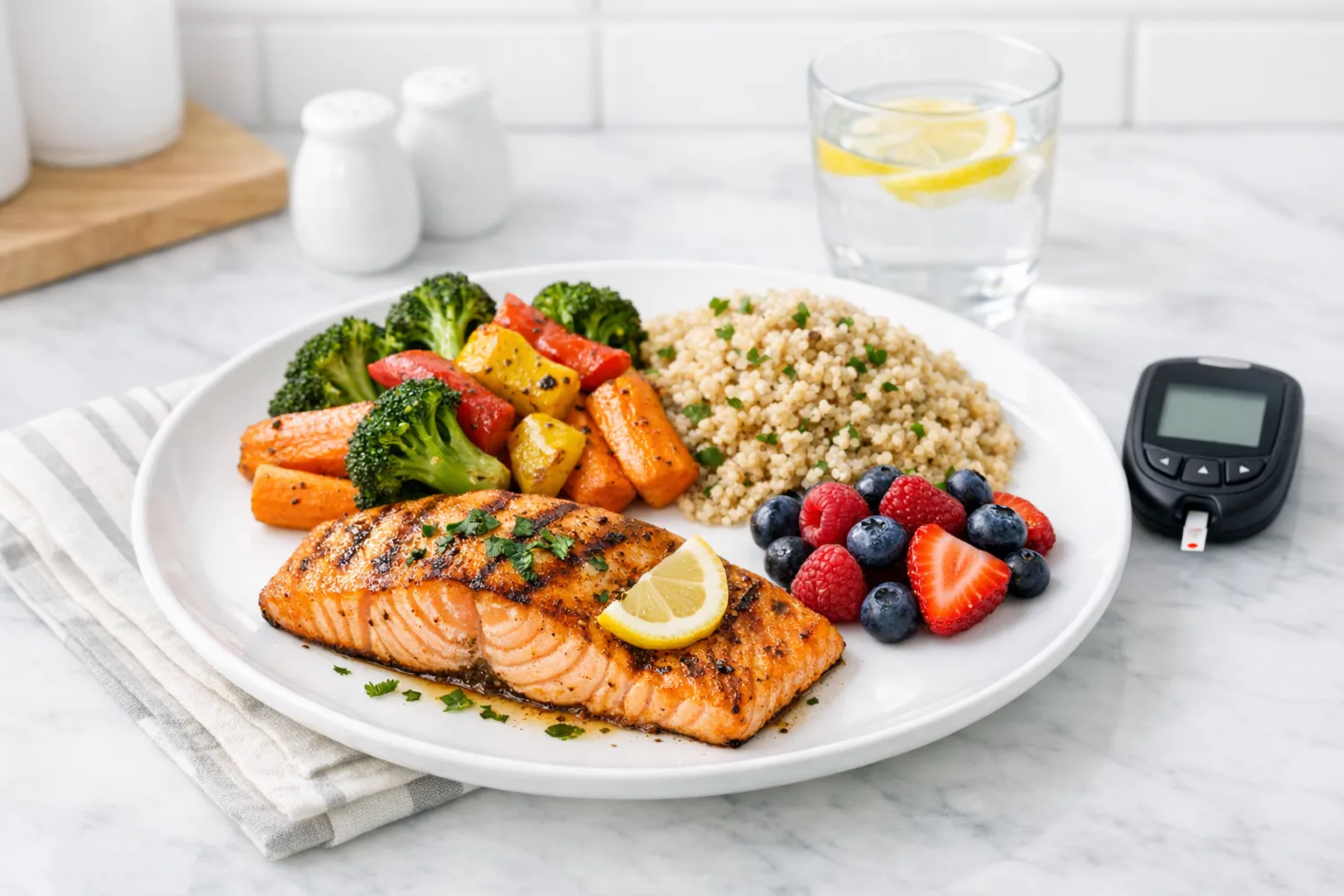
Managing type 2 diabetes through diet is not about deprivation. It is about understanding which foods keep your blood sugar stable and building meals around them consistently. The challenge is not knowledge — most people diagnosed with type 2 diabetes receive a list of foods to eat and avoid within the first week. The challenge is turning that list into actual meals, day after day, without spending hours planning and without eating the same three things on repeat.
That is where a structured meal plan becomes essential. When you know what you are eating for the next seven days, you stop making impulsive food decisions when your energy is low and your blood sugar is fluctuating. The meals are chosen, the groceries are bought, and the only decision left is whether to cook now or in twenty minutes.
This guide provides a complete 7-day meal plan designed for type 2 diabetes, along with the principles behind it so you can build your own plans going forward. It covers carb counting basics, the glycemic index in practical terms, portion guidance, and a grocery list that makes your next shopping trip straightforward.
The Three Principles of Diabetic Meal Planning
Before diving into specific meals, it helps to understand the three rules that govern every food choice in this plan. Once you internalize these, you can adapt any recipe to be diabetes-friendly without needing a specialized cookbook.
Principle 1: Control Carbohydrate Quantity Per Meal
Carbohydrates have the most direct impact on blood sugar. This does not mean you need to eliminate them — your body needs carbohydrates for energy, and many carb-containing foods (vegetables, legumes, whole grains) are among the healthiest things you can eat. The key is controlling how many carbohydrates you consume at one time.
The American Diabetes Association recommends 45 to 60 grams of carbohydrates per meal for most adults with type 2 diabetes, though your doctor or dietitian may recommend a different target based on your medication, activity level, and blood sugar patterns. For snacks, aim for 15 to 20 grams.
Counting carbs sounds tedious, but it becomes second nature within two to three weeks. Most people only rotate through 15 to 20 meals regularly, so once you know the carb count of your usual foods, you rarely need to look anything up.
Principle 2: Choose Low Glycemic Carbohydrates
Not all carbohydrates affect blood sugar equally. The glycemic index (GI) measures how quickly a food raises blood glucose. High-GI foods (white bread, white rice, sugary cereals) cause rapid spikes. Low-GI foods (steel-cut oats, sweet potatoes, most legumes) release glucose gradually, keeping levels more stable.
In practical terms, this means swapping rather than eliminating:
- White rice becomes brown rice, quinoa, or cauliflower rice
- White bread becomes whole grain or sourdough bread
- Instant oatmeal becomes steel-cut or rolled oats
- Regular pasta becomes whole wheat pasta or lentil pasta
- White potatoes become sweet potatoes or legumes
Principle 3: Pair Carbs with Protein, Fat, and Fiber
When you eat carbohydrates alongside protein, healthy fat, and fiber, your body absorbs the glucose more slowly. This is why an apple with almond butter causes a smaller blood sugar rise than an apple alone, even though the almond butter version has more calories.
Every meal in this plan follows this pairing principle: a controlled portion of low-GI carbohydrates combined with a protein source, a healthy fat, and fiber-rich vegetables.
Ready to simplify your meal planning?
Join MyMenu and get AI-generated recipes tailored to your preferences, dietary needs, and schedule.
Download the AppThe 7-Day Diabetic Meal Plan
This plan provides approximately 1,600 to 1,800 calories per day with 45 to 55 grams of carbohydrates per meal. Adjust portions based on your individual needs and your healthcare provider's recommendations.
Day 1 — Monday
Breakfast: Steel-cut oatmeal (1/2 cup dry) topped with 2 tablespoons of walnuts, 1/2 cup blueberries, and a sprinkle of cinnamon. Cinnamon has been shown to modestly improve insulin sensitivity. Carbs: ~35g
Lunch: Large salad with 4 oz grilled chicken breast, mixed greens, cucumber, tomatoes, 1/4 avocado, 1/3 cup chickpeas, and olive oil vinaigrette. Carbs: ~25g
Dinner: Baked salmon (5 oz) with roasted broccoli (2 cups) and 1/2 cup quinoa. Season the salmon with lemon, dill, and garlic. Carbs: ~25g
Snack: 1/4 cup almonds with 1 small apple. Carbs: ~20g
Day 2 — Tuesday
Breakfast: Two-egg omelet with spinach, mushrooms, and 1/4 cup feta cheese. One slice whole grain toast with 1 tablespoon natural peanut butter. Carbs: ~20g
Lunch: Turkey and vegetable soup (homemade with low-sodium broth, diced turkey breast, carrots, celery, green beans, and barley). 1 cup serving. Side of mixed green salad. Carbs: ~30g
Dinner: Chicken stir-fry with bell peppers, snap peas, and broccoli over 1/2 cup brown rice. Use low-sodium soy sauce, ginger, and garlic. Carbs: ~35g
Snack: Celery sticks with 2 tablespoons hummus. Carbs: ~8g
Day 3 — Wednesday
Breakfast: Plain Greek yogurt (3/4 cup) with 1/4 cup granola (low sugar), 2 tablespoons ground flaxseed, and 1/2 cup strawberries. Carbs: ~30g
Lunch: Whole wheat wrap with 3 oz grilled chicken, lettuce, tomato, 1/4 avocado, and mustard. Side of raw carrots and cucumber. Carbs: ~30g
Dinner: Lean beef stir-fry (4 oz sirloin strips) with zucchini, mushrooms, and onions. Serve over cauliflower rice. Side of steamed green beans. Carbs: ~15g
Snack: 1 oz dark chocolate (70% or higher) with 10 almonds. Carbs: ~15g
Day 4 — Thursday
Breakfast: Smoothie with 1 cup unsweetened almond milk, 1/2 cup frozen berries, 1 scoop protein powder, 1 tablespoon chia seeds, and a handful of spinach. Carbs: ~25g
Lunch: Lentil soup (1.5 cups) with a side salad dressed with olive oil and lemon. Lentils are exceptionally low-GI and high in fiber. Carbs: ~40g
Dinner: Herb-crusted pork tenderloin (5 oz) with roasted Brussels sprouts (1.5 cups) and 1/2 cup sweet potato. Carbs: ~25g
Snack: Cottage cheese (1/2 cup) with cucumber slices. Carbs: ~5g
Day 5 — Friday
Breakfast: Two eggs scrambled with diced bell peppers and onions. One slice whole grain toast. 1/2 grapefruit. Carbs: ~25g
Lunch: Tuna salad (made with Greek yogurt instead of mayo) over a bed of mixed greens with cherry tomatoes, olives, and 1/3 cup white beans. Carbs: ~20g
Dinner: Grilled shrimp (6 oz) with zucchini noodles, cherry tomatoes, garlic, olive oil, and fresh basil. Side of 1/2 cup whole wheat couscous. Carbs: ~30g
Snack: 2 tablespoons peanut butter with celery sticks. Carbs: ~8g
Day 6 — Saturday
Breakfast: Whole grain pancakes (2 small, made with almond flour blend) topped with 1/2 cup mixed berries and a drizzle of sugar-free syrup. Two turkey sausage links. Carbs: ~35g
Lunch: Mediterranean quinoa bowl with 1/2 cup quinoa, roasted eggplant, cherry tomatoes, cucumber, Kalamata olives, feta, and tahini dressing. Carbs: ~35g
Dinner: Baked chicken thighs (skin removed, 5 oz) with roasted cauliflower and a large green salad with olive oil dressing. Carbs: ~12g
Snack: A small handful of mixed nuts (1 oz). Carbs: ~6g
Day 7 — Sunday
Breakfast: Vegetable frittata (eggs, spinach, tomatoes, onions, bell peppers) with 1 slice whole grain toast. Carbs: ~18g
Lunch: Black bean soup (1.5 cups) with a dollop of Greek yogurt and a squeeze of lime. Side of sliced avocado. Carbs: ~40g
Dinner: Herb-roasted cod (5 oz) with asparagus (1.5 cups) and 1/2 cup wild rice. Lemon butter sauce on the side. Carbs: ~25g
Snack: String cheese with a small pear. Carbs: ~20g
Tip
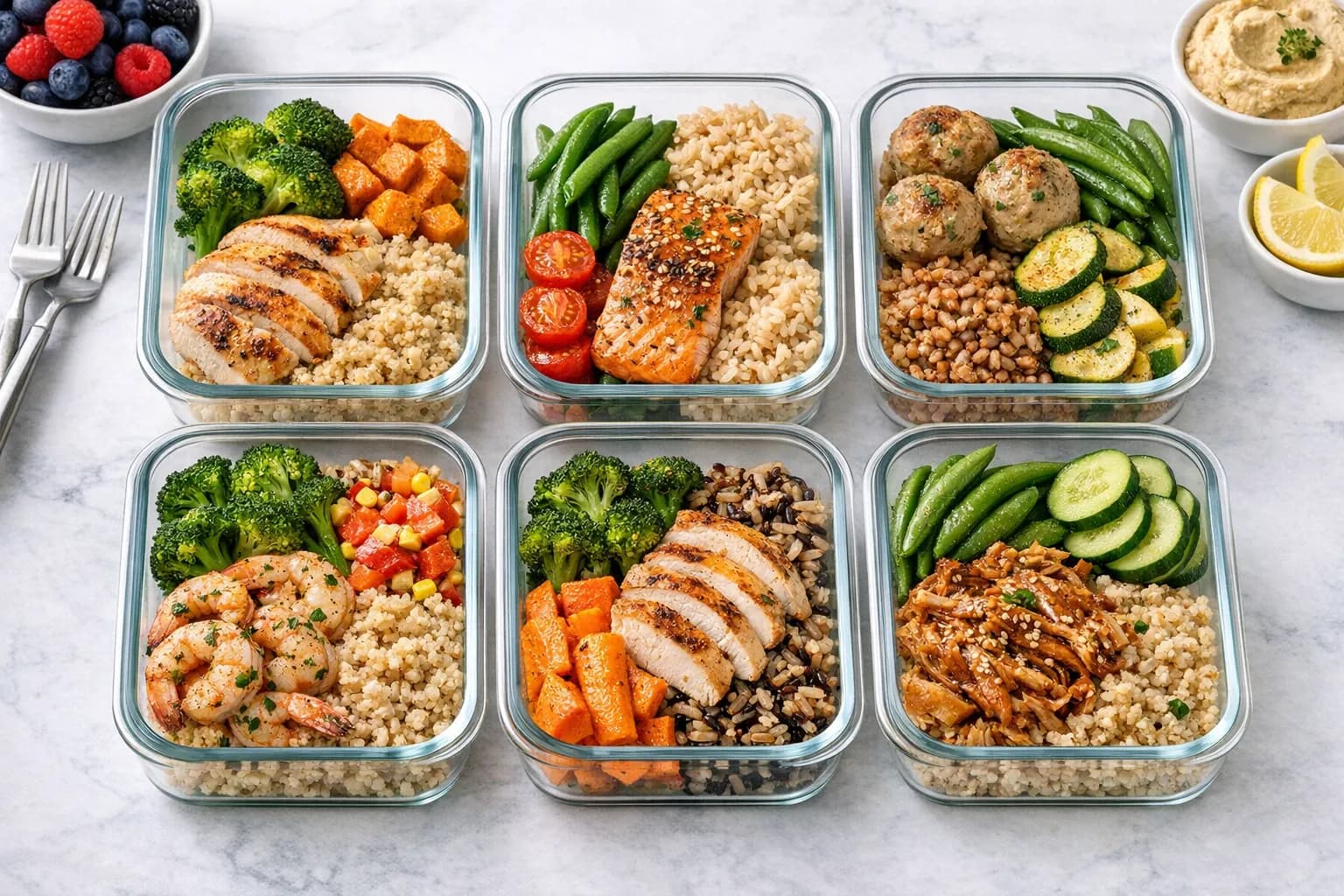
Meal prep on Sunday for the week ahead. Cook your proteins in bulk, roast a large tray of vegetables, and prepare grains in advance. When individual meals only require reheating and assembling, you are far more likely to stick with the plan than if every meal requires cooking from scratch. Our guide on batch cooking for beginners covers exactly how to do this efficiently.
Blood Sugar-Friendly Grocery List
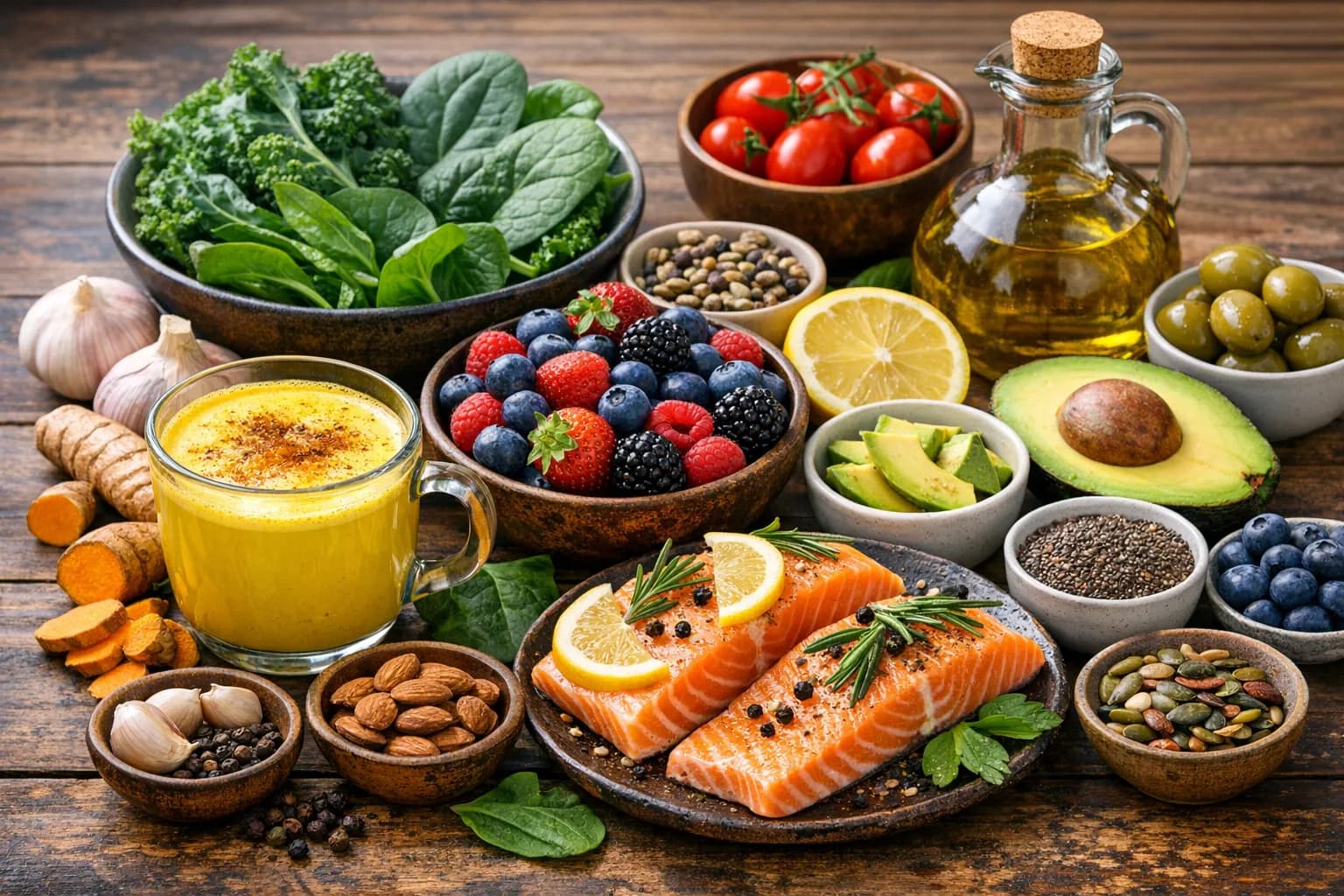
Keep these staples on hand and building diabetic-friendly meals becomes simple rather than stressful.
Proteins
- Chicken breast and thighs (skinless)
- Salmon, cod, shrimp
- Lean ground turkey
- Pork tenderloin
- Eggs
- Canned tuna (in water)
- Tofu and tempeh
Low-GI Carbohydrates
- Steel-cut and rolled oats
- Quinoa, brown rice, wild rice, barley
- Sweet potatoes
- Whole grain bread and wraps
- Lentils, chickpeas, black beans, white beans
- Whole wheat pasta or lentil pasta
Vegetables (Non-Starchy, Unlimited)
- Broccoli, cauliflower, Brussels sprouts
- Spinach, kale, mixed greens
- Bell peppers, zucchini, cucumber
- Tomatoes, asparagus, green beans
- Mushrooms, onions, garlic
Healthy Fats
- Extra virgin olive oil
- Avocados
- Almonds, walnuts, mixed nuts
- Natural peanut and almond butter
- Chia seeds, flaxseed
- Olives
Dairy and Alternatives
- Plain Greek yogurt (no added sugar)
- Cottage cheese
- Feta, string cheese
- Unsweetened almond milk
Common Mistakes to Avoid
Skipping Meals
When you skip a meal, your blood sugar drops. Then you overeat at the next meal, causing a spike. This roller coaster is harder on your body than steady, moderate eating throughout the day. If you are not hungry for a full meal, eat a small snack that combines protein and fiber.
Treating "Sugar-Free" as "Free"
Sugar-free products often replace sugar with refined carbohydrates that affect blood sugar just as much. Sugar-free cookies are still made with flour. Sugar-free ice cream still contains carbohydrates. Always check total carbohydrate content, not just sugar content.
Cutting All Fruit
Fruit contains natural sugar, but it also contains fiber, vitamins, and antioxidants. The fiber slows glucose absorption. Berries, apples, pears, and citrus fruits are excellent choices. The fruits to limit are tropical varieties (mango, pineapple, banana) because they are higher in sugar and lower in fiber. Even these are fine in small portions paired with protein.
Over-Restricting and Then Quitting
The most common pattern: someone receives a diabetes diagnosis, eliminates every food they enjoy, feels miserable for three weeks, and then abandons the diet entirely. Sustainable change comes from modification, not elimination. If you love pasta, eat whole wheat pasta with vegetables and protein. If you love rice, try a half-and-half mix of white and brown rice, or pair a smaller portion of white rice with extra vegetables and protein.
Warning
This meal plan is a general guide. Type 2 diabetes management varies significantly based on medications, activity level, body weight, and individual glucose response. Work with your doctor or registered dietitian to determine the right carbohydrate targets and caloric needs for your specific situation. Monitor your blood sugar before and after meals when trying new foods to understand your personal responses.
How to Build Your Own Diabetic Meal Plans
Once you have followed this plan for a week or two and understand the patterns, building your own plans becomes straightforward.
The Plate Method
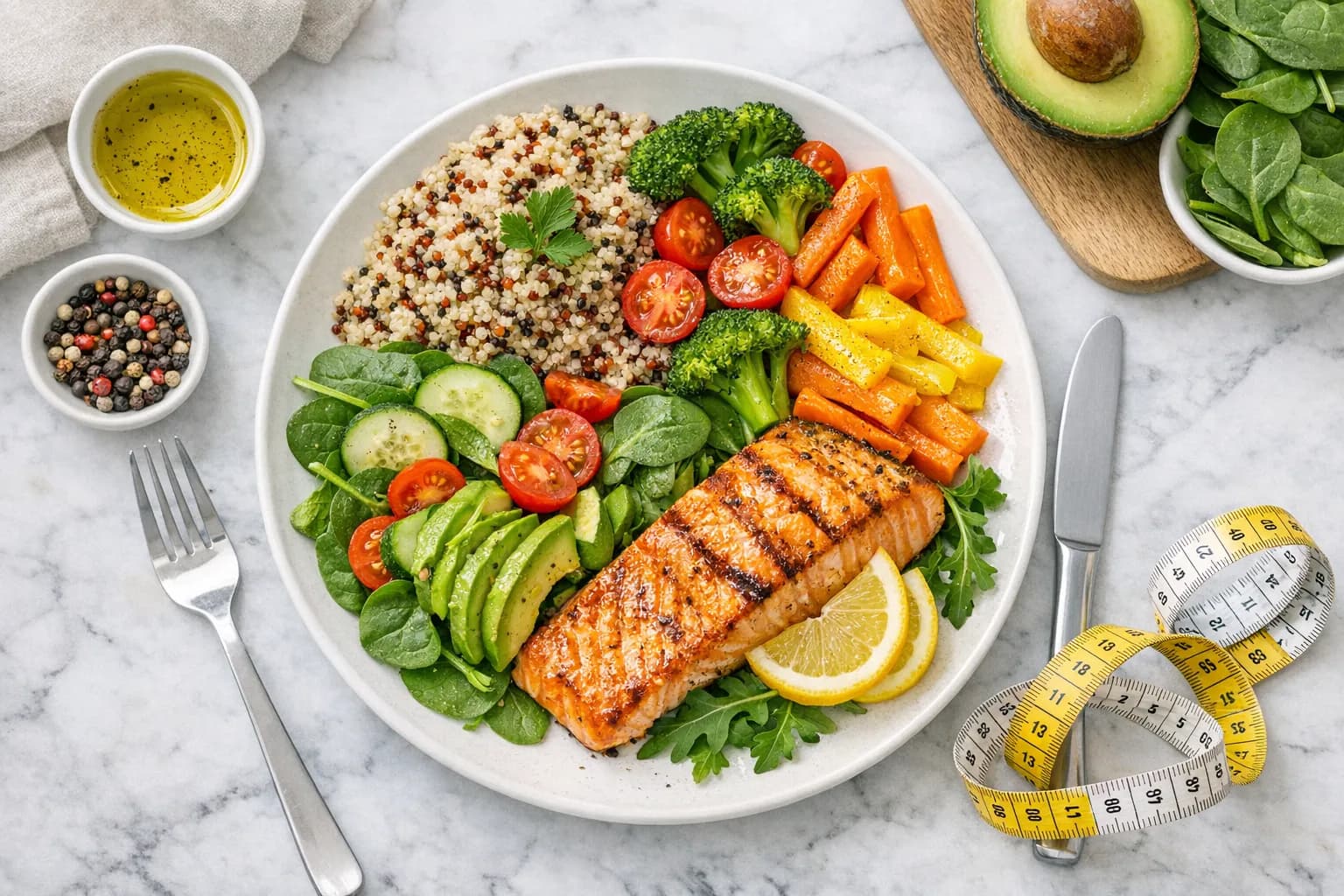
The simplest approach is the diabetes plate method recommended by the American Diabetes Association. Imagine your plate divided into sections:
- Half the plate: Non-starchy vegetables (salad, roasted vegetables, steamed greens)
- One quarter: Lean protein (chicken, fish, tofu, eggs)
- One quarter: Low-GI carbohydrate (brown rice, sweet potato, whole grain bread, legumes)
- Plus: A small serving of healthy fat (olive oil dressing, avocado, nuts)
This visual method keeps portions naturally balanced without counting anything.
The Rotation Strategy
Build a collection of 15 to 20 diabetes-friendly meals that you enjoy. Rotate through them over two to three weeks. This gives you enough variety to prevent boredom while keeping planning simple. Add one or two new recipes per month to gradually expand your rotation.
For generating new meal ideas that respect your dietary preferences, MyMenu can create personalized weekly plans. Always review every ingredient yourself if you manage carbs for diabetes, and follow your clinician's advice.
The Prep-Ahead Approach
Spend one to two hours on the weekend preparing components: cook a batch of grains, grill or bake several portions of protein, roast a large tray of vegetables, and wash and chop salad ingredients. During the week, meals become assembly rather than cooking. This approach pairs perfectly with a weekly meal plan structure.
Moving Forward
Type 2 diabetes is a condition that responds remarkably well to consistent dietary changes. You do not need perfect meals — you need good-enough meals, consistently. A week of following a structured plan will show you measurable differences in your blood sugar readings. A month will show you it is sustainable. Three months will show you it has become routine.
Start with this 7-day plan exactly as written. In week two, swap in a few meals you prefer while keeping the same principles: controlled carbs, low GI choices, protein-carb-fat pairing at every meal. By week four, you will be building your own plans instinctively.
Key Takeaway
Managing type 2 diabetes through diet comes down to three principles: control carbohydrate quantity per meal (45-60g), choose low glycemic carbohydrates (whole grains, legumes, vegetables over refined options), and pair carbs with protein, fat, and fiber to slow glucose absorption. Follow the diabetes plate method — half non-starchy vegetables, one quarter lean protein, one quarter low-GI carbs — and build a rotation of 15-20 meals you enjoy. Meal planning makes this sustainable because every food decision is made in advance, eliminating the impulsive choices that cause blood sugar spikes.