Meal Planning With Kids: How to Get Children Involved at Every Age
A practical guide to meal planning with kids from toddlers through teens. Includes age-appropriate kitchen tasks, kid-approved nutritious meals, and a 7-day family meal plan with built-in kid participation.
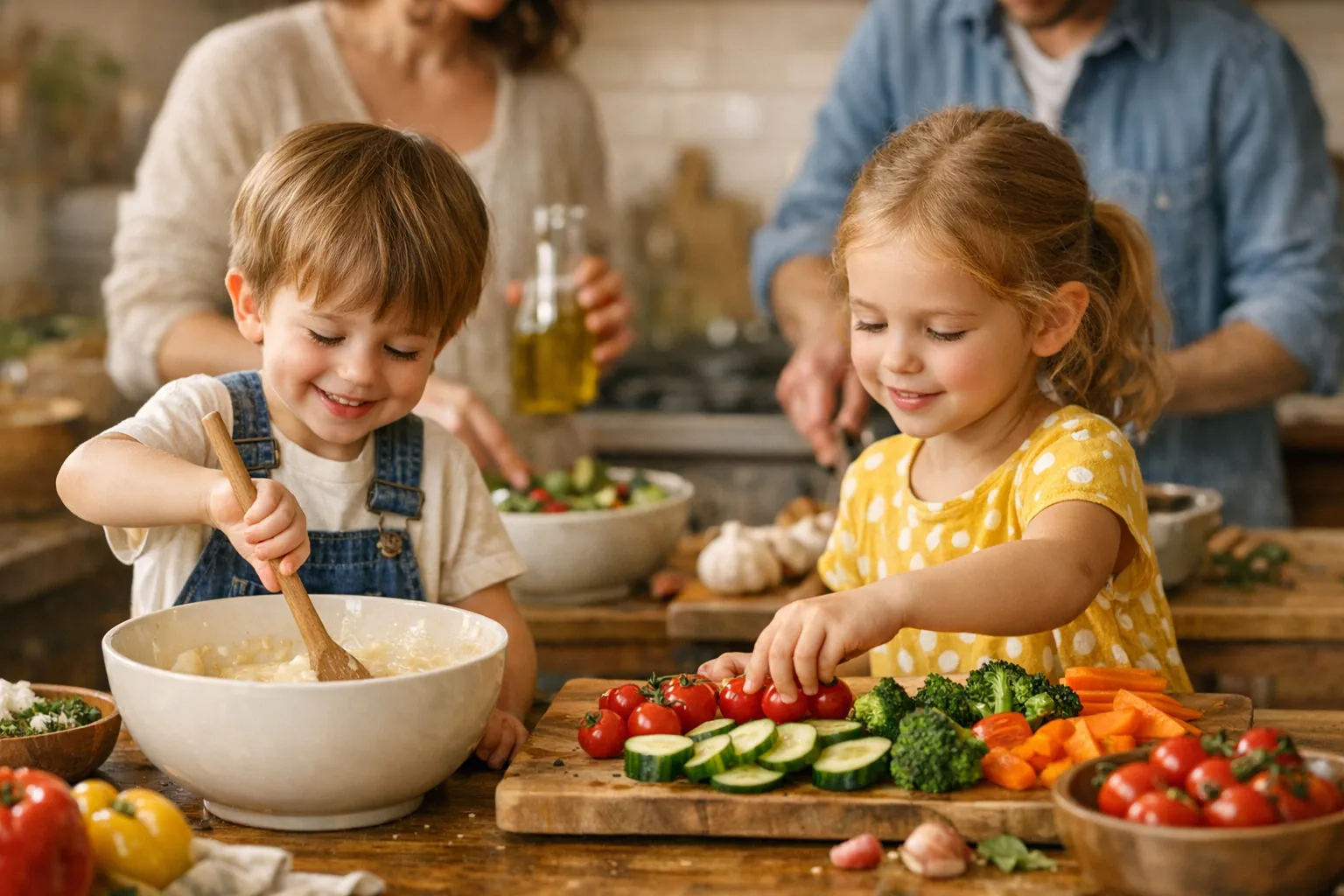
The fastest way to end the nightly "what is for dinner" battle is not to plan better meals. It is to get your kids involved in the planning. Children who participate in choosing and preparing meals are dramatically more likely to eat those meals without complaint. It is not a parenting hack — it is basic human psychology. People of all ages are more invested in outcomes they helped create.
Research published in the Journal of the Academy of Nutrition and Dietetics confirms what most parents sense intuitively: children who are involved in meal preparation eat more fruits and vegetables, show greater willingness to try new foods, and develop healthier relationships with eating that persist into adulthood. A separate study from the University of Alberta found that children who helped cook at home at least once a week had significantly higher dietary quality scores than children who never participated.
The challenge is not whether kids should be involved. It is figuring out what involvement looks like at different ages, how to make it genuinely helpful rather than chaotic, and how to plan meals that accommodate participation without turning dinner prep into a two-hour ordeal.
This guide covers all of it: age-appropriate tasks from toddlers through teenagers, a complete 7-day meal plan designed with kid participation built in, and specific meals that are both kid-approved and actually nutritious.
Age-Appropriate Kitchen Involvement
The mistake most parents make is waiting too long to start. By the time a child is old enough to use a knife safely, they have already spent years being excluded from the kitchen and have no interest in entering it. Start early, start simple, and build skills progressively.
Toddlers (Ages 2-3): The Sensory Explorers
Toddlers cannot cook, but they can participate. Their role is primarily sensory and observational, and the goal is to build positive associations with food and the kitchen.
What they can do:
- Wash vegetables and fruits under running water (with supervision)
- Tear lettuce and fresh herbs by hand
- Stir cold or room-temperature ingredients in a large bowl
- Pour pre-measured dry ingredients into a bowl
- Place items on a baking sheet (with close supervision)
- Help press buttons on the blender or food processor (with your hand guiding theirs)
- Peel bananas and oranges
What to expect: Mess. A lot of it. This is not efficient, and it is not supposed to be. The value is in exposure to raw ingredients, textures, and smells. A toddler who tears lettuce for a salad has a relationship with that lettuce. They may not eat it tonight, but they have touched it, smelled it, and seen it transform from a head into pieces on a plate. That exposure matters.
Practical tip: Set up a "toddler station" — a step stool at a clean section of counter with a large bowl and a few tasks queued up. Wash and prep the ingredients they will handle before they arrive. Their attention span is 5 to 10 minutes, so have their tasks ready to go.
Preschoolers (Ages 4-5): The Eager Assistants
This is the golden age of kitchen participation. Preschoolers are eager to help, proud of their contributions, and developing the fine motor skills needed for real tasks. Capitalize on this enthusiasm — it fades faster than you think.
What they can do:
- Measure ingredients with cups and spoons (accuracy is approximate, and that is fine)
- Mix batters and doughs
- Spread soft ingredients like peanut butter, cream cheese, or hummus
- Assemble sandwiches, wraps, and simple flatbreads
- Use a butter knife to cut soft foods like bananas, strawberries, and cooked vegetables
- Crack eggs (with practice and acceptance of shell fragments)
- Set the table
- Help pick recipes by looking through cookbooks or choosing between two options you present
Key insight: Give preschoolers choices, not open-ended questions. "Do you want tacos or pasta tonight?" works. "What do you want for dinner?" produces chaos. Two or three options that you are equally happy cooking give the child ownership without surrendering your meal plan.
Ready to simplify your meal planning?
Join UseMealPlanner and get AI-generated recipes tailored to your preferences, dietary needs, and schedule.
Download the AppEarly Elementary (Ages 6-8): The Skill Builders
Children in this range are ready for real kitchen skills with appropriate supervision. They can follow simple instructions, understand sequence (first we do this, then we do that), and take genuine pride in producing something the family eats.
What they can do:
- Use a small, sharp knife to cut soft vegetables with direct supervision (teaching proper technique now prevents bad habits later)
- Read recipes aloud and help track steps
- Operate a can opener
- Grate cheese with a box grater (watch the knuckles)
- Knead dough
- Make their own lunch for school
- Flip pancakes and stir items on the stove (with supervision and discussion about heat safety)
- Wash dishes and load the dishwasher
The recipe reading connection: Having a child read the recipe aloud while you cook is one of the most underrated kitchen activities. It builds reading fluency, teaches sequencing, introduces measurement concepts, and gives the child a critical role that does not require touching hot surfaces. By age 7 or 8, many children can follow a simple recipe nearly independently if an adult handles the stove and oven.
Upper Elementary (Ages 9-11): The Sous Chefs
At this stage, children can handle significant portions of meal preparation. The goal shifts from participation to genuine contribution — they are not just helping; they are responsible for components of the meal.
What they can do:
- Follow a recipe independently (with an adult nearby for oven and stove tasks)
- Chop most vegetables and fruits
- Operate the stovetop for simple tasks (boiling pasta, scrambling eggs, cooking pancakes)
- Assemble casseroles and baked dishes
- Make salad dressings and simple sauces
- Plan one dinner per week from a set of family-approved recipes
- Help create the weekly grocery list
The weekly dinner assignment: Assign one dinner per week to your 9-to-11-year-old. They choose the recipe (from a curated set of options), help with the grocery list, and do the bulk of the prep work with you as their assistant rather than the other way around. This inversion — where the child leads and the parent supports — builds confidence and genuine cooking competence.
Tweens and Teens (Ages 12+): The Independent Cooks
Teenagers are physically and cognitively capable of cooking complete meals independently. The challenge at this age is motivation, not ability. The foundation you built in earlier years pays dividends here.
What they can do:
- Plan and cook entire meals from start to finish
- Manage multiple dishes simultaneously
- Adapt recipes based on available ingredients
- Grocery shop independently or with a list
- Pack their own lunches for the entire week
- Cook for the family one to two nights per week
- Experiment with new cuisines and techniques
Making it stick with teens: Teenagers respond to autonomy and relevance. Give them a genuine budget for their cooking night. Let them choose any cuisine. If they want to try making sushi or Thai curry, support it — even if the result is imperfect. The skills transfer even when the specific dish is not something you would have chosen. A teen who can cook three or four meals confidently leaves home with a life skill that many adults never develop.
Kid-Approved Meals That Are Actually Nutritious
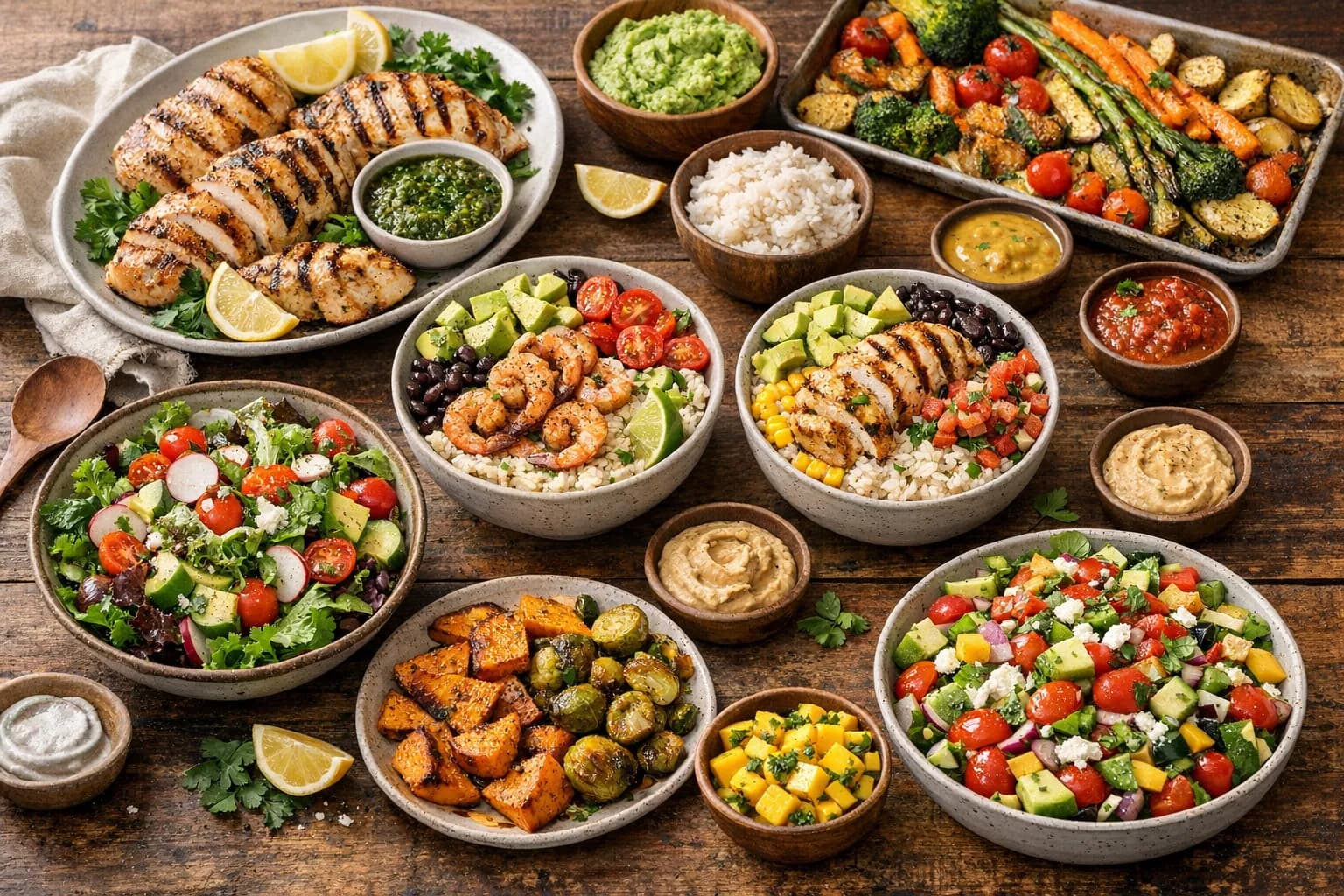
The phrase "kid-friendly food" often defaults to chicken nuggets, pizza, and mac and cheese. These are fine occasionally, but a steady diet of beige food creates a narrow palate and misses critical nutrients. The trick is finding meals that kids genuinely enjoy that also happen to be nutritious. Here are the categories that work consistently.
Build-Your-Own Meals
Children eat more when they have control over assembly. These meals take advantage of that principle.
- Taco bars: Seasoned meat or beans, shredded cheese, lettuce, tomatoes, sour cream, and salsa laid out for self-assembly. Kids who will not eat a taco someone else made will eat one they built themselves.
- Pizza night: Individual flatbreads or naan with sauce, cheese, and a selection of toppings. Even a child who puts only cheese on their pizza is exposed to the other toppings on the table.
- Rice bowl stations: Rice base with grilled chicken, edamame, shredded carrots, cucumber, avocado, and teriyaki or soy sauce.
- Baked potato bar: Butter, cheese, chili, broccoli, sour cream. A baked potato is a blank canvas that pleases everyone.
One-Pot Meals With Familiar Ingredients
Kids tend to accept dishes where they can identify what they are eating. One-pot meals that use recognizable ingredients in simple preparations hit the sweet spot.
- Chicken and rice: A whole meal in one pot. Add diced carrots and peas for vegetables that cook down and become part of the dish.
- Pasta with meat sauce: A rich bolognese with finely diced vegetables blended into the sauce adds nutrition without triggering rejection.
- Chicken noodle soup: Kids who refuse vegetables in solid form often accept them in soup, where everything softens and the broth carries familiar flavor.
- Fried rice: Leftover rice, scrambled eggs, peas, diced carrots, and soy sauce. Kids love the simplicity, and you can add more vegetables over time.
Meals Kids Can Help Cook
These meals have steps that map directly to the age-appropriate tasks listed above.
- Homemade pizza: Preschoolers spread sauce, elementary kids add toppings and grate cheese, older kids can make the dough.
- Stir-fry: Younger kids wash and tear vegetables, older kids slice and manage the wok.
- Smoothies: Toddlers press the blender button, preschoolers add ingredients, older kids make the whole thing.
- Quesadillas: Even a four-year-old can layer cheese and fillings onto a tortilla.
Tip
When a recipe needs to feed both adults and a mix of children, scaling portions precisely matters more than you might think. Doubling a recipe is not always as simple as doubling every ingredient — seasonings, leavening, and cooking times behave differently at different scales. The Recipe Scaler handles the math accurately so the recipe tastes right whether you are cooking for three or thirteen.
The 7-Day Family Meal Plan With Kid Participation
Every meal below includes a note on how children can contribute. The difficulty of participation scales — simpler tasks on busy weeknights, more involved cooking on weekends.
| Day | Breakfast | Lunch | Dinner |
|---|---|---|---|
| Monday | Yogurt parfait bar — kids layer yogurt, granola, and berries | Turkey and cheese roll-ups with apple slices and carrot sticks (kids assemble their own) | Build-your-own tacos — kids choose toppings from seasoned beef, cheese, lettuce, tomato, and sour cream |
| Tuesday | Peanut butter banana toast — kids spread PB and slice bananas with butter knife | Pasta salad with diced cucumbers, cherry tomatoes, and Italian dressing (kids measure and mix) | One-pot chicken and rice with peas and carrots — kids wash rice, measure water, stir in vegetables |
| Wednesday | Smoothies — kids add frozen fruit, yogurt, and spinach to the blender | Hummus and veggie wraps — kids spread hummus and assemble fillings | Homemade pizza on naan or flatbread — kids spread sauce, add cheese and toppings |
| Thursday | Scrambled eggs and toast — older kids crack and scramble eggs, younger kids stir | Quesadillas with cheese and black beans — kids layer ingredients on tortillas | Sheet pan chicken drumsticks with roasted sweet potatoes and broccoli — kids season chicken and arrange the pan |
| Friday | Overnight oats prepared the night before — kids measure oats, milk, and mix-ins | PB and J with a side of grapes and cheese cubes (kids make their own sandwiches) | Pasta with hidden-veggie marinara and garlic bread — kids help blend sauce and set the table |
| Saturday | Pancakes from scratch — kids measure, mix batter, and older kids flip pancakes | Grilled cheese with tomato soup — kids assemble sandwiches, adults handle the stovetop | Chicken stir-fry with rice and teriyaki sauce — kids wash and tear vegetables, older kids help stir-fry |
| Sunday | Mini egg muffins with cheese and diced peppers — kids crack eggs, fill muffin tins, and choose mix-ins | Leftovers buffet — kids reheat and plate their own choices from the week | Slow cooker chili with cornbread — kids measure spices, dump ingredients, mix cornbread batter |
Monday
Tuesday
Wednesday
Thursday
Friday
Saturday
Sunday
Why This Plan Works
Every meal has a participation hook. The goal is not to have children do everything — it is to have them do something for every meal. Even setting the table counts. The consistency of involvement, not the complexity, is what builds the habit.
Busy weeknights get simpler cooking and simpler participation. Monday's taco assembly and Tuesday's one-pot dinner require minimal kid supervision. Saturday and Sunday, when there is more time, the cooking is more involved and the kid participation deeper.
The Sunday slow cooker chili is strategic. It is a low-effort dinner that frees up time for the more involved participation of making cornbread from scratch. Kids get the satisfaction of baking something visible and tangible while the main dish takes care of itself.
Build-your-own meals appear three times (Monday tacos, Wednesday pizza, Thursday quesadillas) because they are the highest-acceptance format for families with mixed preferences and ages.
Strategies for Managing Chaos in the Kitchen
The Prep-Before-They-Arrive Method
The biggest source of kitchen stress with kids is trying to prep ingredients while simultaneously supervising their participation. Solve this by doing your knife work and measuring before calling the kids in. When they arrive, their ingredients are washed, portioned, and ready for them to combine, stir, or assemble. Their experience is pure creation without the waiting and watching that drains their attention.
The "Yes, And" Approach
When a child wants to add something unexpected to a recipe — raisins in the pasta sauce, extra cheese on everything, ketchup on rice — say yes when it is harmless and redirect gently when it would ruin the dish. "Yes, you can put extra cheese on your portion" keeps them engaged. "Let's save the raisins for tomorrow's oatmeal" redirects without shutting them down. The goal is maintaining their willingness to participate, which matters more than any single meal being perfect.
Cleaning as You Go
Teach the habit of cleaning during cooking from the start. While something simmers, wipe the counter. While the oven preheats, wash the mixing bowl. Children who learn this rhythm avoid the dispiriting mountain of dishes at the end that makes cooking feel like a punishment.
Handling Picky Eating Within the Participation Framework
Getting kids involved in cooking does not magically cure picky eating, but it helps significantly. A child who helped make the stir-fry is more likely to try the stir-fry. If you are dealing with a particularly selective eater, the strategies in Meal Planning for Picky Eaters complement this participation approach well — especially the flavor bridge technique and the Division of Responsibility framework.
Teaching Meal Planning as a Life Skill
Beyond the immediate benefits of getting dinner on the table, involving kids in meal planning teaches skills they will use for the rest of their lives.
For Ages 6-8: The Two-Choice Method
Present two dinner options each night and let your child choose. Keep a simple chart on the refrigerator showing the week's meals. This introduces the concept that meals are planned in advance rather than decided in the moment.
For Ages 9-11: The Planning Partner
Sit down together on the weekend and plan the week's dinners. Give them real input: "We need two chicken meals, one pasta meal, and one vegetarian meal this week. What should they be?" This teaches the constraint-based thinking that effective meal planning requires — working within a budget, balancing nutrition, and using what is already in the pantry.
For Ages 12+: The Independent Planner
Assign them full responsibility for one or two dinners per week. They plan the meal, add items to the grocery list, and cook it. Start with meals they know and gradually encourage them to try new recipes. By the time they leave home, they should have a personal rotation of 8 to 10 meals they can cook confidently.
If your family is new to structured meal planning altogether, Meal Planning for Beginners covers the foundational system that makes weekly planning sustainable for the whole family.
Free Tool
Recipe Scaler
Adjust any recipe to your exact family size so portions come out right every time.
Making It Sustainable
The biggest risk with involving kids in cooking is parent burnout. Cooking with children takes longer, creates more mess, and requires patience that is sometimes in short supply after a long day. Here is how to sustain it.
Start with one meal per week. Do not try to involve kids in every meal immediately. Pick Saturday breakfast or Sunday dinner as your designated "cooking together" meal. Once that is established and feels routine, add a second.
Accept imperfection. The pancakes will be lumpy. The eggs will have shell fragments. The counter will be sticky. This is the price of teaching a life skill, and it is worth paying.
Rotate the responsibility. In multi-child families, assign a different child as the "kitchen helper" each day. This prevents the over-eager child from monopolizing and the reluctant child from opting out permanently.
Celebrate the output. When a child has contributed to a meal, mention it at the table. "This rice is great — thanks for measuring the water perfectly" or "the pizza toppings look amazing tonight." Specific, genuine praise reinforces the behavior without overdoing it.
Use AI to reduce your planning burden. The mental load of meal planning is real, and it compounds when you are also thinking about kid participation opportunities. UseMealPlanner can generate a week of family-friendly meals in seconds, freeing your mental energy for the parts that matter most — cooking together and eating together.
Key Takeaway
Children who participate in meal planning and cooking eat better, try more foods, and develop lifelong kitchen skills. Start involvement early — toddlers can wash vegetables and tear lettuce, preschoolers can measure and mix, elementary kids can follow recipes and chop soft foods, and teens can plan and cook complete meals independently. Build your weekly plan around meals with natural participation hooks: build-your-own formats (tacos, pizza, baked potatoes), one-pot dishes where kids add ingredients, and weekend baking projects. The key is consistency over complexity — one cooking-together meal per week, sustained over months, builds more skill and confidence than occasional elaborate projects.
Ready to simplify your meal planning?
Join UseMealPlanner and get AI-generated recipes tailored to your preferences, dietary needs, and schedule.
Download the App